How to read this: Labuan Bajo Honeymoon is an independent honeymoon planning & curation guide for Labuan Bajo and Komodo National Park (Flores, Indonesia) — we curate romantic stays and private phinisi sailings, then route your enquiry to a vetted partner (Komodo Luxury) who arranges the trip. We are not a resort, cruise operator or booking platform, and resort names are used only as neutral examples, not claims of affiliation or endorsement. Prices are by quote and vary by season, vessel and party; figures here are indicative ranges. Sea conditions, ferry and flight schedules, and park rules change — please verify with the operator and official Komodo National Park sources before you travel. This is general information, not advice or a binding offer. We may earn a referral fee at no extra cost to you, and it never changes what we publish.
Packing for a Labuan Bajo honeymoon means preparing for at least three distinct environments: open-sea boat passages where the swell can catch you off guard, equatorial reefs where UV intensity and coral conservation both demand thought, and romantic candlelit dinners on a boat deck or in a resort restaurant where you want to feel like yourselves rather than survivors of the boat ride. What to pack for a Labuan Bajo honeymoon is not complicated, but it is specific — and the gap between a couple who packed well and one who did not shows up fast, usually somewhere in the Komodo channel around day two.
This guide pulls the packing list together in one place, organized by the situations you will actually face. Everything here is grounded in real conditions on and around Flores; nothing is padded. Prices for specific items are not listed because they vary by brand and where you buy — sourcing recommendations are practical rather than retail.
Sea and Boat Essentials — What the Komodo Channel Actually Demands
Whether you are on a private phinisi charter, a shared liveaboard, or a speedboat day trip, you will spend significant time at sea. The Komodo channel sits between the Indian Ocean and the Flores Sea, and the crossings between islands — particularly around Linta Strait and the deeper water north of Rinca — can be lively even in the dry season. In the wet season (roughly November through March), rough passages are a genuine planning variable, not a minor footnote.
Seasickness: The Honest Conversation First
Seasickness is probably the most under-discussed honeymoon topic in every Komodo guide. It ends up being the most memorable part of the trip for couples who did not plan for it. The swell in these channels is real. Some people are fine; others are not; and the same person can react differently on different days depending on sea state, hydration, and what they had for breakfast.
The two medications most commonly recommended for motion sickness are meclizine (sold as Bonine, Antivert, and generics) and dimenhydrinate (sold as Dramamine). Both are antihistamine-class drugs. Meclizine tends to cause less drowsiness; dimenhydrinate can make some people quite sleepy. Neither is a substitute for medical advice — if you have any health conditions or are taking other medications, check with a pharmacist or doctor before departure. Both should be taken before you board, not after the nausea starts. Waiting until you feel sick is too late for oral medication to help much.
Scopolamine patches (prescription in most countries) are another option for people who know they are prone to severe motion sickness. If that sounds like either of you, discuss it with a travel clinic before you leave home. Ginger — in capsule form, candied, or as tea — has some evidence of mild antiemetic effect and is harmless to add.
Beyond medication, the practical steps matter. If you are choosing a cabin on a liveaboard, request an amidships berth — the middle section of the boat, as close to the waterline as possible, where pitch-and-roll motion is smallest. The bow and stern amplify every wave; the middle absorbs it. On a phinisi, amidships cabins are usually on the lower deck. On a speedboat, sit in the centre rather than the bow. Keep your gaze on the horizon when you are on deck. Avoid reading below decks in rough water. Eat something light before departure — an empty stomach can be as destabilizing as a heavy one.
Dry Bags and Waterproof Phone Cases
These are not optional accessories on a liveaboard honeymoon — they are baseline kit. Spray from bow waves, rain squalls, and climbing in and out of tenders for snorkel stops means any bag on deck gets wet. A ten-litre dry bag protects your camera, passport copies, and any other items you want accessible during the day. A twenty-litre dry bag handles a full day’s worth of gear for both of you.
A waterproof phone case serves two purposes: it protects your phone in spray and rain, and it lets you take underwater shots at snorkel sites without a separate camera. The cases that float are worth the marginal extra cost — a dropped phone over the side of a boat in the Komodo channel is not coming back. Many couples also bring a dedicated compact underwater camera or a GoPro-type action camera, which is worthwhile if underwater photography matters to you. Battery life on action cameras drops faster in warm salt water; bring a spare battery and keep both charged between island stops.
Footwear on Boats and Beaches
Boat decks — especially wooden phinisi decks — are slippery when wet. Bare feet work when the deck is dry, but in rain or after snorkel returns, the combination of wet teak and salt film is a genuine slip hazard. Bring a pair of non-slip water shoes or sandals with grip soles that you do not mind getting wet. These double as footwear for beach landings, where you are often stepping off a tender into shallow water and walking over sand, rocks, or coral shards to reach shore. Flip-flops are better than nothing but worse than a proper water sandal with a heel strap that stays on your foot.
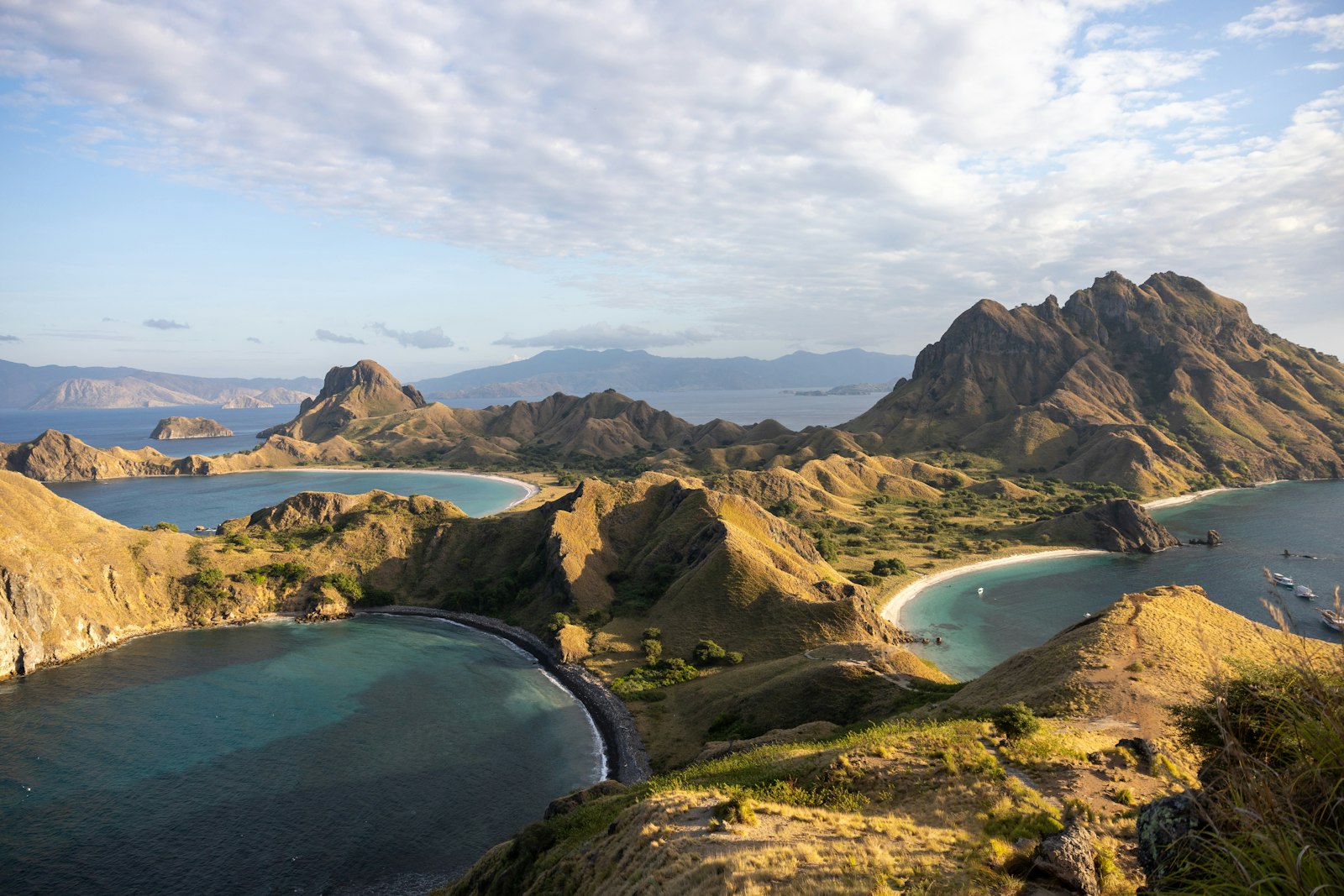
For the Padar hike, a light trail shoe or a sturdy closed-toe sandal helps — the steps are man-made and manageable, but they are steep enough that a flat sandal without grip can feel insecure on the descent. Most people hike Padar in trail runners or similar. The walk up takes approximately 20–40 minutes depending on pace; plan to be at the top before sunrise, which means starting in the dark with the help of a headlamp or your phone torch.
Layers and Rain Gear
Equatorial Indonesia sounds uniformly hot, and at noon at anchor it is. But an open boat deck at 06:00, crossing a channel at speed, is cold by tropical standards — the wind chill at 25–30 knots over 27°C air temperature can leave you shivering and wishing for a fleece. Bring at least one light long-sleeved layer each for boat travel: a thin merino or synthetic top, or a light zip-up. Something you can pull on quickly at dawn and shed by 09:00.
If your honeymoon falls in the wet season (November through March), a packable rain jacket is not optional. Even in the dry season, sudden squalls are possible, particularly in shoulder months. A jacket that packs to the size of a fist takes up almost no space in a bag and the one time you need it, you will be very glad it is there. Avoid cotton for layering on the boat — it stays wet and heavy. Synthetics and technical fabrics dry in an hour.
Sun and Reef — Protecting Yourselves and What You Are Swimming Over
Labuan Bajo sits at roughly 8° south of the equator. UV intensity at this latitude is categorically different from a beach holiday in southern Europe or even tropical Queensland. The index regularly hits extreme (11+) between 09:00 and 15:00 during the dry season. You can burn in under twenty minutes without protection. This is the section of the packing list that couples most commonly underestimate until they are a lobster-pink couple at dinner on night one.
Reef-Safe Sunscreen — Why Komodo Operators Are Specific About This
Some operators in Komodo National Park now require guests to use non-oxybenzone and non-octinoxate sunscreen as a condition of entering the water. Whether it is a formal requirement or a strong operational request varies by boat; treat it as a hard requirement regardless. The reason is practical: chemical UV filters like oxybenzone and octinoxate have documented coral-bleaching effects and accumulate in reef systems. Komodo’s reef is one of the most biodiverse in the world. The operators who work here long-term have a direct interest in preserving it.
Reef-safe in this context means mineral-based: zinc oxide and/or titanium dioxide as the active ingredients, no chemical UV filters listed. SPF 30 is a minimum; SPF 50 is better given the UV conditions here. Bring it from home or from Bali — availability of genuinely reef-safe mineral sunscreen in Labuan Bajo town is not reliable, and airport security liquid limits make last-minute packing impractical if you are flying in with a full carry-on.
A rashguard covering your arms and torso is the most effective sun protection and simultaneously reduces how much sunscreen you need to apply while in the water. Most snorkelers and divers in Komodo wear one. It also protects against jellyfish contact and accidental coral brushes. Long-sleeved rashguards offer more coverage; short-sleeved work fine for calmer sites. Bring one each, and consider a spare — they dry quickly but two days in a row without drying is possible in wet season.
Hat, Sunglasses, Hydration
A wide-brimmed hat — not a baseball cap — makes a real difference on a boat deck in full sun. Baseball caps leave your ears and neck exposed; a wide brim covers both. Lightweight packable options in synthetic straw or nylon exist, and they compress small enough for a day bag. Bring one for each of you.
Polarised sunglasses earn their place here more than almost anywhere else. The glare off open water at midday is intense, and polarised lenses cut it in a way regular tinted lenses do not. They also reveal reef structure and fish beneath the surface when you are looking over the side, which is genuinely enjoyable during island transits. Bring a case and a glasses cord or strap so they stay on your face in wind and when you lean over the rail.
Hydration is easy to neglect on the water because you do not feel the same heat cues as you would on land. You are still sweating; the breeze dries it instantly. Bring a refillable water bottle and use it. Most liveaboards provide drinking water on board; a litre-capacity bottle that you can refill and carry to snorkel sites means you are drinking throughout the day rather than only at meals. This matters more than it sounds on days that start at 05:30 and involve a Padar hike, three snorkel stops, and sun exposure from dawn to dusk.
Honeymoon Extras — Looking and Feeling Like You Mean It
The romanticized version of a Komodo honeymoon that fills Instagram involves effortlessly elegant couples in linen at a candle-lit dinner on a boat deck. The reality is that you arrive from a snorkel stop in a salt-crusted rashguard with your hair doing whatever it wants, and then you want to clean up and feel like the occasion matters. This is achievable with a small amount of planning. It does not require a full wardrobe.
Something Nice for Dinner
A candlelit dinner on the deck of a private phinisi, or at a high-end resort like AYANA Komodo or Ta’aktana, is a genuine honeymoon moment. You do not need formal wear, but you do want something that is not a rashguard and board shorts. Bring one or two outfits per person that feel intentional — a linen dress, a light cotton shirt you actually like, a printed sarong worn as a skirt. The standard is smart-casual in tropical terms: light, packable, nothing that creases into ruins in a dry bag.
Dinner on a liveaboard happens on deck and is usually served by your crew, sometimes with candles and fresh flowers arranged as part of a honeymoon package. At a resort, the setting handles the atmosphere — you just need to show up feeling like yourselves rather than exhausted day-trippers. One considered outfit each is enough.
Modest Cover-Ups for Villages and Cultural Moments
Flores is a predominantly Catholic island with traditional Manggarai communities, and respect for local culture is both courteous and noticed. If your itinerary includes any village visits, cultural sites, or shore excursions through inhabited areas — rather than purely uninhabited park islands — bring a light cover-up or sarong that covers your shoulders and knees. A cotton sarong weighs almost nothing and has multiple uses: cover-up, beach towel, pillow on a long boat crossing, extra layer on a cool evening.
On the park islands themselves (Komodo, Rinca, Padar, Pink Beach), standard beach wear is fine. The cover-up is for town, villages, and any spontaneous encounter with a local ceremony or market that your itinerary picks up.
Other Small Comforts Worth the Space
A few items that experienced Komodo liveaboard travellers consistently mention:
- Headlamp or small torch: Early starts are real — Padar sunrise means leaving the boat before dawn. A headlamp keeps both hands free on the steps.
- Seasickness wristbands (acupressure): Low evidence base but harmless and worth adding if either of you is prone. Some people swear by them as a supplement to medication.
- Lip balm with SPF: Often forgotten, always needed. The combination of sun, wind, and salt water on open decks is hard on lips.
- Power bank: Charging ports on liveaboards vary. A 10,000 mAh power bank keeps both phones alive through a long day at sea and lets you charge overnight without competing for a single cabin socket.
- Insect repellent: See the health section below — relevant everywhere in Flores, not just inland.
A Planning Snapshot: Komodo Packing List for Couples
| Category | Item | Note |
|---|---|---|
| Sea & Boat | Meclizine or dimenhydrinate tablets | Take before boarding, not after nausea starts; check with pharmacist if on other meds |
| Dry bag (10–20 L each) | Waterproof; keep on deck for camera, passport copies, daily kit | |
| Waterproof phone case (floating) | Worth the floating version; snorkel shots + rain protection | |
| Non-slip water shoes / grip sandals | Wet phinisi decks and beach landings; also Padar hike | |
| Light long-sleeved layer (synthetic or merino) | Cold at dawn crossing; shed by 09:00 | |
| Packable rain jacket | Wet season essential; useful shoulder months too | |
| Sun & Reef | Reef-safe mineral sunscreen SPF 50 (zinc oxide/titanium dioxide) | Non-oxybenzone, non-octinoxate; bring from home or Bali — sourcing in LBJ unreliable |
| Rashguard, long-sleeved (one each, spare if possible) | Best sun + reef protection; reduces sunscreen needed in water | |
| Wide-brim hat | Covers ears and neck unlike baseball cap; packable nylon or straw | |
| Polarised sunglasses + strap / case | Cuts water glare; strap keeps them on in wind | |
| Refillable water bottle (1 L minimum) | Liveaboards provide drinking water; drink more than you think you need | |
| Honeymoon Extras | 1–2 smart-casual outfits (linen, cotton, printed sarong) | Candlelit dinner on deck or at resort; packable, not formal |
| Light cover-up / sarong | Village and cultural site visits on Flores; also doubles as beach wrap | |
| Headlamp | Pre-dawn Padar hike; hands-free on the steps | |
| Power bank (10,000 mAh) | Charging on liveaboards varies; keeps both phones alive all day | |
| Health & Safety | DEET or picaridin insect repellent | Dengue-endemic area; apply at dawn and dusk especially |
| Travel insurance documents (hard copy) | Confirm dive cover and medical evacuation if relevant | |
| Lip balm with SPF | Wind + sun + salt; consistently forgotten, consistently needed |
Thinking through exactly which nights to be on a phinisi versus in a resort — and whether your dates fall in a season that changes anything on this list? Our enquiry form is the fastest way to get a practical answer, or you can reach our planning team on WhatsApp at +62 811-3823-875. We route enquiries to Komodo Luxury, a vetted local operator; if you proceed with them, they may pay us a referral fee at no extra cost to you.
Health and Safety — General Information, Not Medical Advice
This section covers health context that is relevant to every couple planning time in Flores and the Komodo islands. It is general information only. For personal medical advice, prophylaxis decisions, and current disease risk assessments, consult a travel clinic before departure and check authoritative sources such as the CDC Travelers’ Health pages (wwwnc.cdc.gov/travel) and Fit for Travel (fitfortravel.nhs.uk), which are updated more frequently than any guide.
Mosquito-Borne Disease: Dengue and Malaria
Flores, including Labuan Bajo, is dengue-endemic. Dengue fever is caused by a virus transmitted by Aedes mosquitoes that bite primarily during daylight hours, with peaks at dawn and dusk. There is no prophylactic medication for dengue; avoidance is the only protection. This means applying an effective insect repellent consistently throughout your trip.
DEET (20–50%) and picaridin are the two repellent active ingredients with the strongest evidence base for efficacy. Either works. Picaridin is odourless and gentler on synthetic fabrics and plastics (relevant if it contacts your camera body or sunglasses frame); DEET is more widely available. Apply to all exposed skin, especially around ankles and lower legs where Aedes mosquitoes tend to bite. Re-apply after swimming. Repellent clothing (long sleeves, long trousers in the evening) adds another layer, especially at dusk when you are on deck after snorkeling and your skin is exposed.
Malaria exists in parts of Indonesia, including some rural and eastern areas of Flores. Labuan Bajo itself is a coastal, urbanizing town where risk is lower than in remote rural areas, but the risk picture is area-specific and changes. Whether malaria prophylaxis is recommended for your itinerary depends on exactly where you are going, your dates, and your personal health history. This is a decision for your travel clinic and the authoritative travel health sources listed above — not a determination to make from a general guide. Book a travel health consultation at least four to six weeks before departure, earlier if possible.
Medical Facilities and Evacuation
Labuan Bajo has clinics and a hospital, but medical facilities here are significantly below the level available in Bali or Jakarta. For anything beyond minor illness or injury, the realistic pathway involves medical evacuation to Bali or Jakarta. Flights from Labuan Bajo to Bali take approximately one hour ten to twenty minutes; in a medical emergency, coordination and logistics add to that time.
Travel insurance that includes medical evacuation coverage is not optional for a trip like this — it is foundational. If you are planning to dive, confirm explicitly that your policy covers dive-related injuries (many standard travel policies exclude them or cap the coverage at levels insufficient for evacuation and treatment). Specialized dive insurance products exist for this reason.
Decompression Facilities for Divers
Divers specifically should verify the status of decompression facilities in the region before their first dive. A hyperbaric (recompression) chamber has been referenced by some operators in the Labuan Bajo area, but its operational status is [VERIFY with your dive operator and travel insurer before departure] — the available documentation on this is not robust enough to state with confidence. Do not assume a functioning chamber is nearby; confirm directly with your dive shop and your insurer what the evacuation protocol is and where the nearest confirmed operational facility is located. This is standard due diligence for diving anywhere in eastern Indonesia, not a warning unique to Komodo. It is a reason to prepare properly, not a reason to avoid diving.
The Sun, Again
Mild sunburn becomes a significant problem when it covers your back and shoulders and you then need to spend two more days lying on boat cushions in the sun. Heat exhaustion is possible, particularly on the Padar hike if you start late and hit the peak sun hours on the descent. Both are avoidable with the items already listed — sunscreen, rashguard, hat, water. They are listed again here because sunburn and dehydration are the most common ways a Komodo honeymoon becomes medically uncomfortable, and they are entirely preventable.
What You Do Not Need to Pack
Packing anxiety tends to push people toward bringing more than they need, particularly for a honeymoon where they want everything to be right. A few things you genuinely do not need:
- Formal wear. There is no occasion in Labuan Bajo that requires it. A clean linen shirt and trousers or a simple dress is the ceiling.
- Snorkeling gear (usually). Liveaboards and most day trips provide masks, fins, and snorkels. If you have a prescription mask or you are particular about mask fit, bringing your own is worth it. Otherwise, it is extra bulk.
- Multiple pairs of shoes. Water shoes, one pair of light casual shoes or sandals for town and resort evenings, and a trail shoe if the Padar hike matters to you. Three pairs maximum; most couples manage with two.
- A heavy beach towel. Liveaboards provide towels. A lightweight microfibre towel is useful for snorkel stops where you want a quick dry before pulling on a rashguard, but a full-sized terry towel is dead weight.
- A hair dryer. Power on liveaboards is typically 220V with limited outlets. High-end resorts have them. You will spend most of the trip with salt-air hair regardless; embrace it.
How the Season Changes What You Pack
The split between dry season (roughly April through October, most reliable May through September) and wet season (roughly November through March) affects a few specific items on this list.
- Dry season (May–September)
- Calmer seas mean smoother passages — your seasickness medication is still worth having, but you are less likely to need it on most days. The rain jacket is a sensible precaution for squalls but not daily kit. Dry bags are essential regardless. UV intensity is high all year, but the dry season means more sustained sun exposure as cloud cover is lower. This is when most honeymoon couples come, which means some sunset viewpoints and day-trip departure points will have other boats in view — on a private phinisi charter you have more flexibility to time away from the crowd.
- Wet season (November–March)
- The rain jacket becomes daily kit, not optional. Bring a second one if space allows, or accept that one will be damp until the next calm period. Sea state can limit passages on some days, meaning your itinerary may flex; a good operator will communicate changes early. Seasickness risk increases with rougher water — take medication proactively rather than waiting to see how you feel. The amidships cabin choice matters more in these conditions. On the upside: fewer visitors, lower pricing on most packages, and lush green island landscapes that the dry season does not offer.
- Shoulder months (April, October)
- Conditions are variable and can surprise in either direction. Pack for both possibilities: rain jacket, layers, full sun kit. This is the practical midpoint.
Luggage Format: What Actually Works on a Phinisi
Phinisi cabins are intimate. They are designed for the sea, not for unpacking a wheeled suitcase. If your honeymoon includes any liveaboard nights — and for most Komodo couples it does — soft-sided bags that compress and stow under a bunk or in a small cabinet work far better than rigid suitcases. A medium duffel or soft carry-on sized bag per person is the practical format. You can leave a larger suitcase at your Labuan Bajo hotel or resort for the duration of the liveaboard leg.
If you are staying entirely at a resort like AYANA Komodo or Ta’aktana, standard luggage is fine. Both properties have proper handling and room storage. But for anyone spending even one or two nights on the water, smaller and softer is the right call.
Ready to lock down the itinerary these items are supporting? Use our enquiry form or message the planning team on WhatsApp at +62 811-3823-875. Getting the dates, vessel type, and island sequence right is the part where having a local partner on your side makes a genuine difference. Our service is editorial and free to use; if you book through Komodo Luxury after using our help, they may pay us a referral fee at no extra cost to you.
Frequently Asked Questions
Can I buy reef-safe sunscreen in Labuan Bajo?
Possibly, but it is not reliable. Labuan Bajo has a growing tourism infrastructure and some supermarkets and pharmacies stock international brands, but the specific non-oxybenzone, non-octinoxate mineral formulations that Komodo operators require are not consistently available. Bali is a much better sourcing point if you are routing through Denpasar first — health shops and some pharmacies there stock reef-safe options. The safest approach is to bring what you need from home and top up in Bali if required, rather than trying to find it in Labuan Bajo the night before your boat departs.
Is seasickness medication available in Labuan Bajo?
Basic antiemetics including dimenhydrinate (Dramamine equivalents) are typically available in Labuan Bajo pharmacies and minimarkets. That said, sourcing medication in an unfamiliar town on the morning you board a boat is a stressful way to start a honeymoon. Bring what you need from home, and treat anything you find locally as a backup. If you prefer meclizine or a prescription option like scopolamine, those require planning in advance regardless — neither is reliably stocked outside major Indonesian cities.
Do we need vaccines for Labuan Bajo?
This guide does not give medical advice, and vaccine recommendations depend on your origin country, health history, and specific itinerary. The standard starting point is to consult a travel clinic or GP at least four to six weeks before departure. Authoritative sources for Indonesia travel health include the CDC Travelers’ Health pages (wwwnc.cdc.gov/travel/destinations/traveler/none/indonesia) and the UK’s Fit for Travel (fitfortravel.nhs.uk). Both are updated regularly. Common recommendations for Indonesia travel typically include hepatitis A and typhoid as a baseline; your clinician will advise on anything beyond that for your specific situation.
Can we bring a drone for photography on our honeymoon?
Drone use in Komodo National Park is regulated by the park authority and is not permitted in most areas without specific authorization. Operators are required to follow these rules, and a responsible operator will tell you clearly that recreational drone flights are not allowed at the park sites. Outside the park boundary — in Labuan Bajo town or on private resort grounds — different rules apply, and you would need to check local regulations and your resort’s own policy. The practical advice: do not plan your honeymoon photography around drone footage from within the park, because the permit situation makes it unlikely for most visitors.
How heavy should our bags actually be for a Komodo liveaboard?
On a phinisi liveaboard, the practical ceiling is around 15–20 kg per person in a soft bag, with a daypack for items you want on deck during the day. Cabin storage varies by vessel, but generally there is enough for two medium duffels plus day bags. The weight limit matters more if you are taking a small charter flight or connecting propeller service within Indonesia — several domestic routes have lower checked-bag allowances than international flights, so check your specific booking. Labuan Bajo itself is reached by Garuda, AirAsia, Citilink, and others from Bali and Jakarta; baggage allowances vary by carrier and ticket class.