How to read this: Labuan Bajo Honeymoon is an independent honeymoon planning & curation guide for Labuan Bajo and Komodo National Park (Flores, Indonesia) — we curate romantic stays and private phinisi sailings, then route your enquiry to a vetted partner (Komodo Luxury) who arranges the trip. We are not a resort, cruise operator or booking platform, and resort names are used only as neutral examples, not claims of affiliation or endorsement. Prices are by quote and vary by season, vessel and party; figures here are indicative ranges. Sea conditions, ferry and flight schedules, and park rules change — please verify with the operator and official Komodo National Park sources before you travel. This is general information, not advice or a binding offer. We may earn a referral fee at no extra cost to you, and it never changes what we publish.
A Labuan Bajo honeymoon itinerary is a day-by-day plan for exploring Komodo National Park — by liveaboard phinisi, private day-cruise or land resort — during the time you can realistically carve out after the wedding. The right length and pace depend on two things you have to settle first: how much time you actually have, and how you feel about sleeping on a boat.
This page is a planning framework, not a fixed package. Use it to understand how different lengths and styles stack up, then follow the links to the full 3-day itinerary and 5-day itinerary pages when you’re ready to go deeper. If you’d like a custom route built around your travel dates, our enquiry form connects you with our vetted concierge partner, Komodo Luxury (WhatsApp +62 811-3823875 or sales@komodoluxury.com).
Disclosure: if you use our free planning help and proceed with a partner or operator, they may pay us a referral fee at no extra cost to you. No one can pay to change what we publish.
The Logic Behind Komodo Itinerary Length
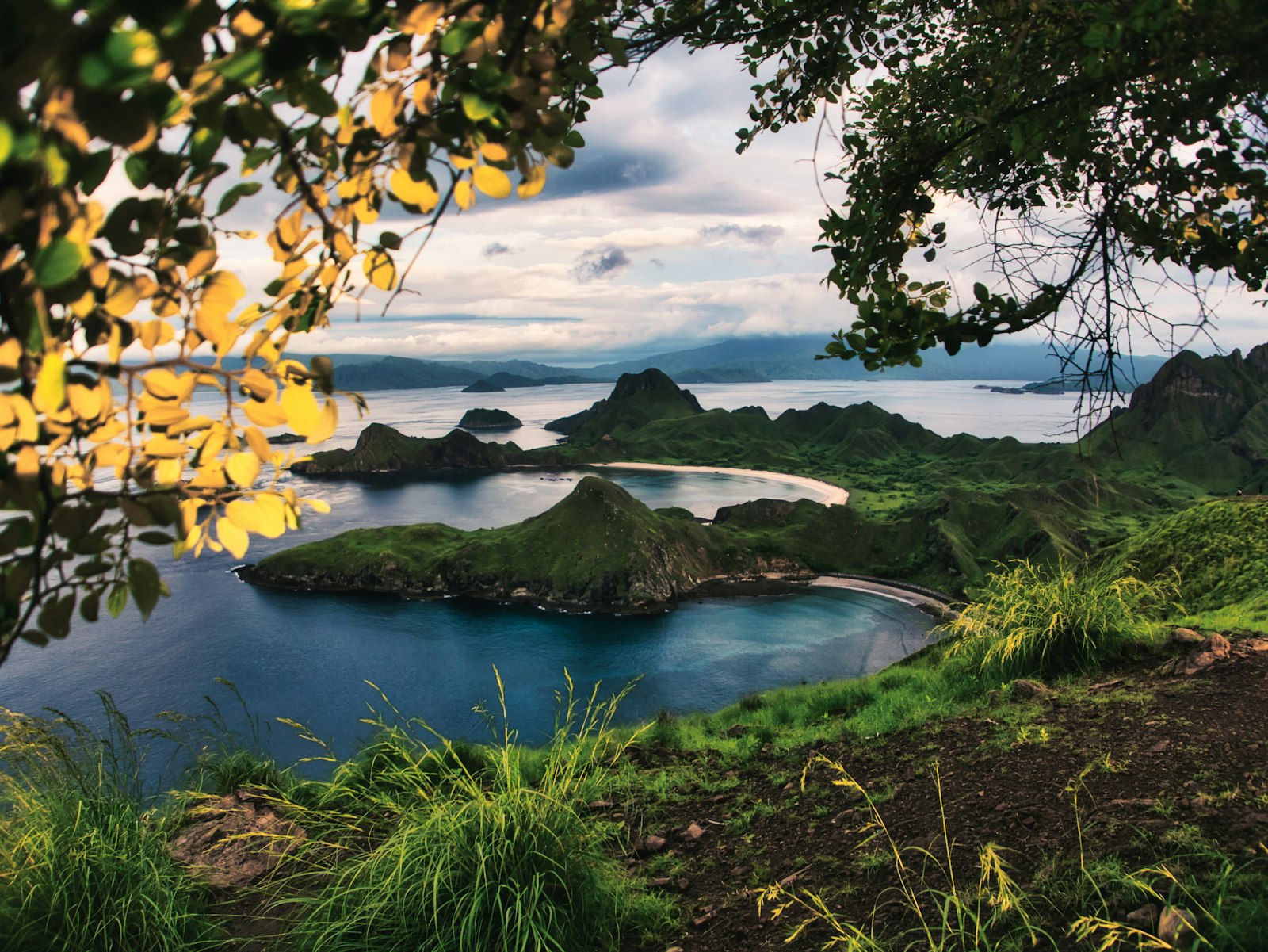
Komodo National Park sits off the western tip of Flores Island, accessed from Labuan Bajo town and Komodo International Airport (IATA: LBJ). Every headline sight — Padar’s multi-bay viewpoint, Pink Beach on Komodo Island, the dragon-ranger walks on Rinca or Komodo, Manta Point at Makassar Reef — requires a boat. That means days are structured around boat departures, water conditions and sometimes unpredictable weather, not restaurant opening times or spa schedules.
The fundamental tension in planning is this: the park rewards early risers and punishes people who need slow mornings. Operators almost universally depart between 06:00 and 07:00. Padar sunrise, the single most-photographed moment in the archipelago, requires you to begin the steep staircase climb in pre-dawn light. If that makes you both groan, a resort-anchored itinerary with day-trips might suit you better than a liveaboard schedule. Neither choice is wrong — they’re just different trips.
What Length Actually Changes
Three days is enough to reach Padar, Pink Beach and one dragon island. Five nights adds Manta Point, a second island, slower sailing between anchorages, and the unhurried version of everything. Seven or more nights opens up the outer islands and makes multi-destination add-ons (Lombok’s Gili islands, a Raja Ampat extension) realistic rather than rushed.
Longer does not automatically mean better. A five-night cruise with one rough weather day can feel more satisfying than a seven-night trip crammed with early alarms and back-to-back landings. Build in buffer. The sea decides the schedule here, not the itinerary PDF.
The Three Main Itinerary Styles
Style 1: Private Phinisi Liveaboard
You charter a whole traditional sailing boat — a phinisi — and it becomes your private floating villa for the duration. Private means nobody else’s honeymooners at your breakfast table. It also means you set the pace: sleep in, skip a stop if you want, anchor somewhere beautiful and just drift.
The tradeoff is real money. Private phinisi charters for two people start at roughly USD 4,000 for a two-night trip on a well-maintained mid-tier boat; three to four nights on a premium vessel runs USD 6,000 to 10,000 or more. These are by-quote figures — peak season, cabin size, chef quality and crew numbers all move the price. Park entrance and ranger fees are commonly excluded and should be confirmed with your operator before signing anything.
Seasickness matters here. Komodo’s channels are tidal and can push up a chop even in the dry season. Amidships cabins are more stable than bow or stern berths. If either of you has a history of motion sickness, come prepared with medication (meclizine or dimenhydrinate are commonly carried) and discuss the itinerary routing with the captain upfront — some crossings can be timed to calmer morning water.
Style 2: Resort-Anchored with Day Trips
You stay on land at one of the properties near Labuan Bajo and join day-cruise departures for the park sights. This suits couples who want a proper bed every night, a real shower, and a restaurant they can walk to. The luxury end of this market has improved significantly: AYANA Komodo Waecicu Beach has its own private jetty on the waterfront, and Ta’aktana — a Marriott Luxury Collection property that opened in 2024 — sits roughly 1.2 miles from town with spa and dining on site.
The cost structure is different. High-end resort rates range from roughly USD 350 to USD 800 or more per couple per day, depending on room category and inclusions. Day-trip boats are additional unless you’ve arranged a package. What you gain is flexibility: if one of you feels unwell, you have a room to retreat to rather than a rolling boat deck.
The honest disadvantage is access. Day-trip boats are shared unless you book privately, departures are fixed, and you lose the magic of waking up at anchor with nothing but sea and islands around you. The best sunrise shots at Padar happen from a liveaboard that arrived overnight — day-trippers arrive later and miss the first light.
Style 3: Hybrid — Resort First, One Night Liveaboard
A growing option for couples who want the best of both: spend two or three nights in a resort getting adjusted to the heat and the time zone, then board a private boat for one or two nights to catch the liveaboard experience without committing to a full charter. The sunset sailing, the stars from the deck, the silent anchorage — you get those. You just need a single good cabin night, not a week of them.
This style works well in a five-to-seven day total trip. Operationally, it takes a little coordination between your resort and your boat operator on luggage storage and transfer logistics. Worth sorting out in advance rather than improvising on arrival morning.
Seasonal Timing and the Day-by-Day Rhythm
When to Go
The dry season runs roughly April through October, with May through September offering the most reliably calm seas and clear skies. These are also the most popular months, which means higher accommodation rates and — for private charters — more competition for boats. Book three to six months out if you’re targeting July or August.
The wet season, November through March, brings rougher and less predictable seas. The park doesn’t close, but crossings can be rescheduled, snorkelling visibility can drop, and certain anchorages become inaccessible. Some couples deliberately choose this window for lower prices and fewer crowds, then accept the flexibility requirement. That’s a legitimate trade if weather disruption won’t derail your happiness.
Manta ray sightings are reported year-round at Makassar Reef (Karang Makassar), though conditions vary by site, current and plankton availability. Some operators mention December to February as a period with stronger plankton blooms that concentrate the mantas — treat that as useful context from experienced guides, not a guarantee. Confirm current conditions with your operator before basing your travel dates on manta expectations.
The Komodo Day Rhythm: What to Expect Hour by Hour
Regardless of style, Komodo itineraries follow a rhythm shaped by the equatorial sun and the tidal channels. Here is what a typical active day on the water actually looks like:
- 05:30 to 06:00
- Wake-up on a liveaboard. Coffee on deck. Hike to Padar viewpoint begins in darkness if you want sunrise at the top — this is non-negotiable for the iconic shot.
- 06:00 to 07:00
- Boat departures from Labuan Bajo harbour for day-trips. Later than this and you’re not getting Padar sunrise — you’re getting midday heat on a largely shadeless hillside.
- 07:00 to 09:00
- Padar hike. The stepped path is steep but short — budget around 20 to 40 minutes up. The precise step count is widely quoted in travel blogs but not officially confirmed; what matters is that it’s a genuine uphill effort, not a flat walk.
- 09:30 to 12:00
- Snorkelling at Pink Beach or a drift snorkel at Manta Point (Karang Makassar), or dragon trekking on Rinca or Komodo Island with a mandatory ranger escort. Guided trek fees run around IDR 200,000 per group of up to five people [non-official source; confirm with the park office before your trip].
- 12:00 to 14:00
- Lunch on board. Rest. The crew repositions to the next anchorage while you sleep, read, or do nothing productively.
- 14:00 to 17:00
- Second snorkel stop, a shallow reef at Kelor Island, beach time, or slow sailing between islands. The Kalong Island bat migration near dusk is a popular liveaboard add-on worth building in if your routing allows.
- 17:30 to 19:00
- Sunset from the deck or from a high point. Cold drinks. This is the slow, important part of a Komodo honeymoon — the part that has nothing on the schedule.
- 19:30 onward
- Dinner on board at anchor. Stars. Earlier to bed than you’d expect anywhere else.
Day-trip couples return to Labuan Bajo by late afternoon and have the town restaurants and resort evenings to themselves. Liveaboard couples stay at anchor — which, on a clear night in a calm bay, is what most people remember longest about this trip.
A Quick Look at Costs by Style
These are planning ranges only. All pricing is by-quote; park entrance, ranger and harbour fees are commonly excluded and should be confirmed line-by-line with any operator before booking. Figures exclude international or domestic flights to Labuan Bajo (LBJ).
| Trip Style | Typical Duration | Approximate Cost (USD, per couple) | Notes |
|---|---|---|---|
| Budget open-trip liveaboard (shared) | 2 to 3 nights | From roughly $350 to $700 total | Other guests on board; no privacy guarantee |
| Mid-range private phinisi charter | 2 to 3 nights | Approx. $4,000 to $6,000 total | Whole boat; by-quote; park fees usually excluded |
| Premium private phinisi charter | 3 to 4 nights | Approx. $6,000 to $10,000 or more | Larger or newer vessels; chef, water toys, suite cabin |
| High-end resort honeymoon with private day trips | 4 to 5 nights | Approx. $350 to $800 or more per couple per day | Land-based; spa, stable bed, restaurant dining; day trips extra |
| Hybrid: resort nights plus one or two liveaboard nights | 5 to 7 nights total | Variable; budget for both components | Most flexibility; requires coordination between providers |
On Komodo National Park entrance fees: the most-reported foreign-visitor structure for 2024 to 2025 includes an entry ticket of around IDR 250,000 per person per day, a conservation fee of around IDR 100,000, and a harbour fee of around IDR 25,000 per person. Some sources bundle these differently and quote IDR 350,000 to 500,000 all-in per foreign visitor per day. The 2022 proposal for an IDR 3,750,000 annual membership was officially cancelled and is not in force. Always confirm current rates with your operator or the park office before travel — these numbers have changed before and may change again. Fees are frequently bundled into tour packages; ask for itemised pricing if that matters to your planning.
Which Itinerary Length Is Right for You?
3 Days and 2 Nights: The Essential Komodo Honeymoon
Three days is the minimum that covers the headline sights without cutting any of them: Padar sunrise, Pink Beach, and one dragon island (Rinca is closer to Labuan Bajo; Komodo Island is farther and often paired with Pink Beach in the same day’s routing). You won’t feel rushed if you accept that this is the concentrated version — every day has a clear purpose, and there is no lazy mid-trip morning built in.
This length works best as part of a longer two-centre trip where you’ve already had rest time. Arriving from five days in Bali means you’re not starting Komodo still jet-lagged and trying to do a Padar sunrise on day two of your entire trip. See our full 3-day Labuan Bajo honeymoon itinerary for the hour-by-hour plan and a breakdown of which sights fit where.
5 Days and 4 Nights: The Balanced Option
Five days is where most couples find the right balance between coverage and pace. You can add Manta Point at Makassar Reef (weather and season permitting — sightings are never guaranteed), visit both Rinca and Komodo Islands without doubling back on yourself, include Kelor Island for an easy half-morning snorkel close to town, and still have one full afternoon where the boat just anchors somewhere and there is genuinely nothing scheduled.
A five-day private charter also gives the crew time to cook properly — fresh fish caught that morning, a beach picnic if tides and park rules allow, a sunset dinner on deck with something that isn’t reheated from a cool box. That’s where the real romance of a liveaboard lives, and three days isn’t quite long enough to settle into it before it’s over.
See our full 5-day Komodo honeymoon itinerary for a day-by-day breakdown of one well-paced route through the park.
7 Days and Beyond: Multi-Destination Routing
A week or more opens up the outer islands north of the main park zone, and makes a two-centre or three-centre itinerary feasible without feeling like a relay race. Common extensions include:
- Bali first, then Labuan Bajo: the most common two-centre honeymoon pattern. Bali for four to five days of rest, culture and spa time, then fly the roughly one hour and ten to twenty minutes on the Denpasar (DPS) to LBJ route to begin the Komodo leg. Garuda Indonesia and Indonesia AirAsia are among the carriers operating this route [carrier schedules change — verify closer to your travel date].
- Gili Islands add-on: Lombok and the Gili Islands sit between Bali and Flores. A seaplane connection or inter-island boat transfer can link them into the trip, though this adds logistical complexity and should be planned carefully against your weather window.
- Raja Ampat extension: for diving honeymooners with the time and budget, an eastward extension to Raja Ampat is the most spectacular marine environment in Indonesia. It requires separate routing through Sorong and works best as a dedicated leg rather than a quick add-on.
If you’re considering a multi-destination honeymoon, raise it early with your concierge partner. Routing decisions affect boat availability, flight connections and visa-free day counts, and the best options book out many months ahead during peak season. Reach us via our enquiry form or message Komodo Luxury directly on WhatsApp +62 811-3823875 — they handle multi-leg routing regularly and can give you a realistic timeline for building the trip.
The Shared Cruise Warning
One thing deserves plain language before you book anything: a budget open-trip liveaboard means other couples and solo travellers share the boat with you. Some people book this expecting a private honeymoon experience and are genuinely disappointed. The economics are very different — a shared berth per person from roughly IDR 2,750,000 (around USD 175 to 200) compared to a private charter starting at around USD 4,000 for the whole boat — and so is the actual experience on board.
If privacy matters, book private. There is no workaround on a shared boat. Before signing anything, ask your operator specifically: how many guests will be on this vessel? How many cabins total? Is there any private anchorage time guaranteed? Get the answers in writing. A reputable operator won’t object to the questions.
Getting to Labuan Bajo: The Quick Version
Komodo International Airport (LBJ) sits about two kilometres from Labuan Bajo town centre — roughly five to fifteen minutes by taxi, with an informal tariff around IDR 50,000 to 70,000 depending on the driver. Most couples arrive via Bali’s Ngurah Rai Airport (DPS): the flight takes approximately one hour and ten to twenty minutes in the air, with multiple carriers operating the route. Direct flights from Jakarta (Soekarno-Hatta, CGK) are available on Garuda Indonesia, and Surabaya (SUB) also has direct connections. A Lombok (LOP) to LBJ service has operated seasonally but is not guaranteed as a daily option [verify before booking].
Flight timing matters for your first honeymoon night. If your liveaboard embarkation is the morning after arrival, an evening flight into LBJ gives you time to settle, eat in town and sleep before a 06:00 departure. If you’re starting with a resort stay, a midday arrival gives you a full afternoon at the pool. Build the transfer buffer into your itinerary.
For a detailed routing guide with carrier notes, see our getting to Labuan Bajo page. For a month-by-month guide to sea conditions, crowds and pricing, the best time to visit Komodo page has what you need.
Ready to Build Your Itinerary?
The pages below go into day-by-day detail for the two most common honeymoon lengths. Start with the one that matches your available time, then adjust from there.
- 3-Day Labuan Bajo Honeymoon Itinerary — Padar, Pink Beach, one dragon island, tightly sequenced
- 5-Day Komodo Honeymoon Itinerary — adds Manta Point, second island, slower pace
If neither length fits your trip exactly, or you want a custom romantic komodo island itinerary built around your specific dates and priorities, use our enquiry form to describe what you’re looking for. Our concierge partner Komodo Luxury can also be reached directly on WhatsApp +62 811-3823875 or at sales@komodoluxury.com. If you proceed with them through our recommendation, they may pay us a referral fee — at no extra cost to you, and with no influence over what we write here.
Frequently Asked Questions
How many days should we spend in Labuan Bajo for a honeymoon?
Three days covers the essential sights — Padar, Pink Beach and one dragon island — without it feeling like a race. Five days adds Manta Point and a more relaxed pace, which most couples find better suited to a honeymoon. If you’re coming via Bali and already have rest time built in there, three days in Komodo makes a satisfying final chapter. If Komodo is the centrepiece of your trip, five days is the better call.
Is a private phinisi charter worth the cost for a honeymoon?
For couples who value genuine privacy and want the liveaboard experience without sharing a boat with strangers, yes — and more clearly so than it might seem when you compare the full cost. A private two-night charter from roughly USD 4,000 versus two nights in a luxury resort plus private day trips is not as far apart as the headline number suggests. The experience itself is fundamentally different: you set the schedule, the crew focuses entirely on you two, and anchoring in a quiet bay with no other boats in sight is a version of romance that a hotel room simply cannot replicate.
Do Komodo itineraries always require a 6am start?
Operators depart between 06:00 and 07:00 because Padar sunrise is the flagship selling point of the park, and the trek needs to begin before the light gets harsh and the heat builds. You can skip the sunrise and depart later, but you’ll lose the best photography conditions and the coolest part of the day for the uphill walk. On a private charter, you have more flexibility to negotiate the morning rhythm with your captain directly — some sites, particularly Manta Point, are best approached on the morning tidal current regardless of what time you’d prefer to wake up.
Can we book a romantic beach dinner or sandbar picnic as part of our honeymoon?
Private beach and sandbar dinners are offered as honeymoon add-ons by many liveaboard and day-trip operators. Whether they’re actually possible depends on tides, current park regulations, and conservation rules at specific sites — some beaches in Komodo National Park have access restrictions or time limits. Ask your operator exactly which locations are currently permitted for this kind of setup, what the dinner actually involves, and whether there are any additional fees. A candlelit dinner on a secluded beach at anchor sounds like marketing copy, but on the right evening in the right bay, it genuinely is that.
What if bad weather disrupts our planned itinerary?
Crossings can and do get rescheduled when conditions are rough. A good captain will not push a sea crossing that poses real discomfort or risk just to stick to a printed schedule. The honest advice is to build buffer: if your flight home is on day six, leave day five genuinely free rather than filling it with a stop that depends on calm water. This matters most in the shoulder season (April or October) and in the wet season (roughly November through March), when the weather window narrows and conditions can change faster than a printed itinerary can account for.