How to read this: Labuan Bajo Honeymoon is an independent honeymoon planning & curation guide for Labuan Bajo and Komodo National Park (Flores, Indonesia) — we curate romantic stays and private phinisi sailings, then route your enquiry to a vetted partner (Komodo Luxury) who arranges the trip. We are not a resort, cruise operator or booking platform, and resort names are used only as neutral examples, not claims of affiliation or endorsement. Prices are by quote and vary by season, vessel and party; figures here are indicative ranges. Sea conditions, ferry and flight schedules, and park rules change — please verify with the operator and official Komodo National Park sources before you travel. This is general information, not advice or a binding offer. We may earn a referral fee at no extra cost to you, and it never changes what we publish.
A Labuan Bajo honeymoon FAQ answers the questions that recur in every planning conversation we have with couples: is it actually worth coming this far, how do you get there, what will it cost, which season is right, should you do a resort or a private phinisi, and what happens if you want to propose on a sandbar or get married on the water. This page collects those questions, answers them honestly, and flags anything that is unverified or subject to change — because the most useful thing a planning guide can do is tell you what it does not know as clearly as what it does.
We are an independent editorial guide, not an operator or booking platform. No resort or charter company can pay to influence what appears here. If you use our planning help and proceed with our vetted local partner, Komodo Luxury, they may pay us a referral fee at no extra cost to you — that relationship is disclosed up front and cannot change what we write.
Is Labuan Bajo Good for a Honeymoon?
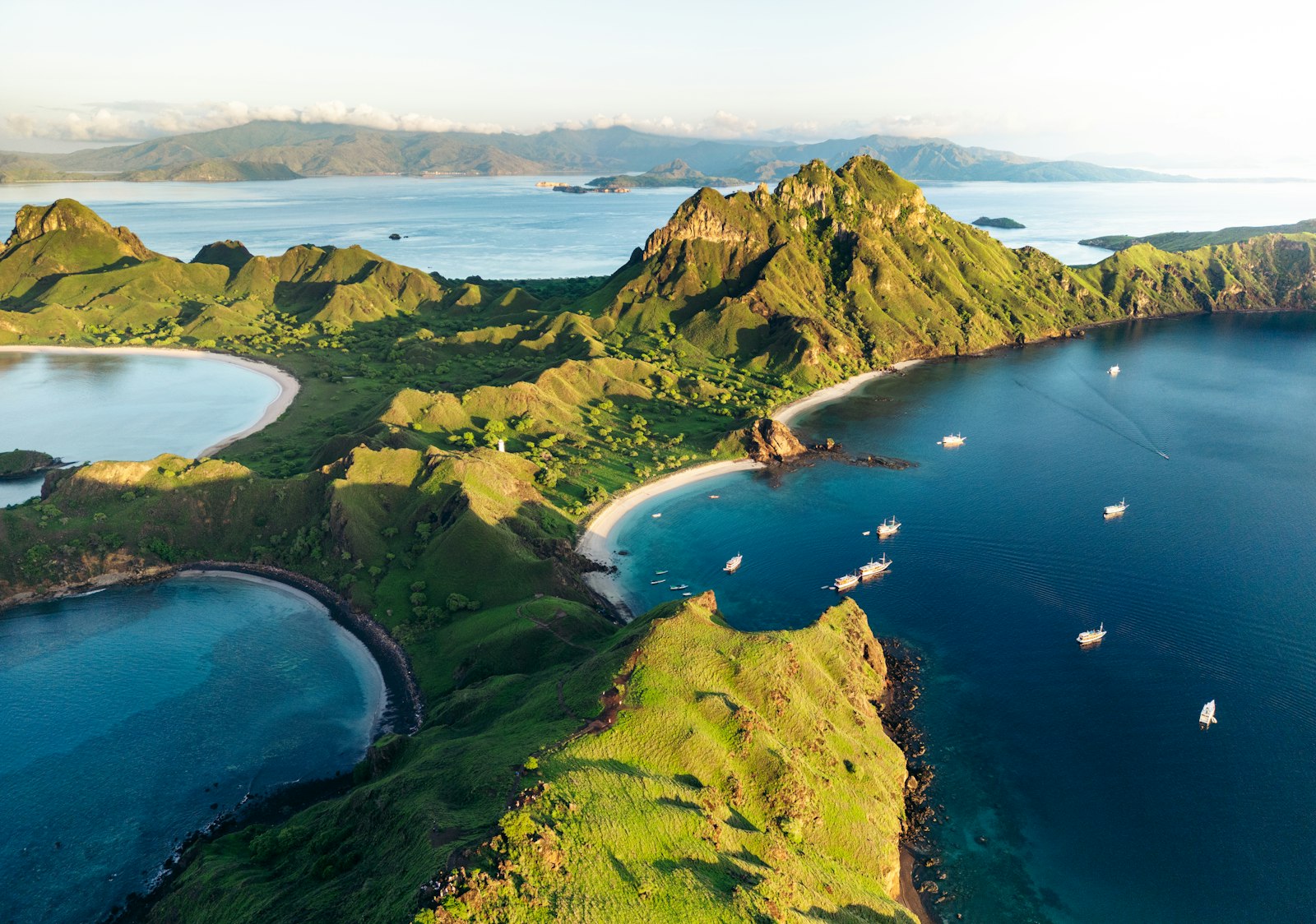
Yes, genuinely — with one honest qualification. Is Labuan Bajo good for a honeymoon? Absolutely, if you and your partner are comfortable with boat-based travel and want a nature-first experience rather than a resort-pool-and-spa week. If the idea of waking up anchored beside Padar Island, drifting with manta rays at Makassar Reef before breakfast, or walking a pink-sand beach on Komodo Island with nobody else around sounds like the honeymoon you have been imagining, then Labuan Bajo will exceed your expectations.
The qualification is real, not rhetorical. The national park access is almost entirely by boat. The seas in some channels are choppy, and seasickness is a legitimate concern. Accommodation options at the luxury end are fewer and more expensive per night than equivalent Bali villas. Flights to Labuan Bajo are limited and almost all route through Bali or Jakarta. If you need five-star infrastructure at every moment and a ground-floor room you can walk to from a pool, Labuan Bajo will frustrate you. If you can tolerate some roughness in exchange for landscapes that feel genuinely unreachable, it will not.
The most common honeymoon pattern is the two-centre trip: a few nights in Bali to decompress after a long international journey, then three to five nights in Labuan Bajo for the nature — either anchored at a resort or living aboard a private phinisi sailing. Both structures work. They suit different couples.
Do You Need to Fly via Bali to Get to Komodo?
This is one of the most frequently asked komodo honeymoon planning faq questions, and the short answer is: not necessarily, but Bali is by far the most practical connection point for most international travellers.
Labuan Bajo is served by Komodo International Airport, IATA code LBJ, on the western tip of Flores Island, roughly two kilometres from the town centre. The nonstop flight from Bali (Ngurah Rai Airport, DPS) takes about one hour and ten to twenty minutes. Multiple carriers have operated the route — Garuda Indonesia, Indonesia AirAsia, Citilink, Batik Air, Lion Air, Wings Air, and TransNusa among them — with roughly 31 weekly frequencies in recent schedules [VERIFY current carrier mix and schedules before booking, as these change seasonally].
Direct flights from Jakarta (Soekarno-Hatta, CGK) exist — Garuda Indonesia has operated this route. Surabaya (SUB) also has direct connections. Lombok (LOP) to LBJ is seasonal and limited, not a reliable daily option [VERIFY before planning a Lombok connection]. If you are coming from elsewhere in Indonesia, Jakarta and Bali are the two realistic gateways.
For international couples arriving from Europe, Australia, or the Americas, the standard routing is: international long-haul to Bali, then domestic connector to Labuan Bajo. Most couples add at least two nights in Bali on either end of the trip — partly for logistics, partly because Bali provides the spa-and-villa recovery that makes Komodo’s more active pace feel earned. Airport transfer from LBJ to town is five to fifteen minutes by taxi, roughly IDR 50,000–70,000 (tariffs are informal — confirm the fare before you get in).
How Many Days Do You Need in Labuan Bajo for a Honeymoon?
Three nights is the minimum to see the main sites without feeling rushed; five nights is the sweet spot for most couples; seven nights and beyond is for those who want to dive multiple sites or sail further into the park at a genuinely relaxed pace.
Here is what each length actually gives you:
- 3 nights (4 days)
- Two full park days: one covering Padar Island sunrise and Pink Beach on Komodo Island, one covering Rinca Island for dragons and Manta Point at Makassar Reef. A half-day for Kelor Island or a sunset cruise. It is compact but doable, and most resort guests do exactly this before flying back to Bali.
- 5 nights (6 days)
- Space for all the above plus a rest day, a couples’ spa morning, and the option to linger at Pink Beach rather than rush back for the boat schedule. Private phinisi couples often choose this length — two or three sailing days cover the key sites without the breathless pace of a three-night charter.
- 7 nights (8 days)
- The right choice for serious divers (four-dive days add up), couples combining a resort stay with a two-night phinisi segment, or anyone wanting to move more slowly. Less common as a standalone Labuan Bajo stay; more common as part of a two-week Bali-plus-Komodo itinerary.
For a detailed day-by-day breakdown of both the 3-night and 5-night options, read our Labuan Bajo Honeymoon Itineraries guide.
When Is the Best Time to Visit for a Komodo Honeymoon?
The dry season runs roughly April through October, with May through September the most reliable window. In this period, seas are calmer, weather more predictable, underwater visibility at dive and snorkel sites is generally better, and park access is more consistent. April and October are workable shoulders — fewer crowds than the June-to-August peak and often better value.
The wet season (November through March) brings rougher and less predictable seas. The national park does not seasonally close, but boat crossings can be postponed, some snorkel sites can be unswimmable on a given day, and the chance of a sunrise at Padar Island hidden behind cloud cover is real. A wet-season trip is entirely possible — just build flexibility into the itinerary and do not stake the honeymoon on any single specific experience happening on a specific day.
What About Manta Ray Season?
This question comes up in almost every komodo honeymoon questions conversation. The honest answer: manta rays are reported at Makassar Reef (Karang Makassar) throughout the year, but conditions and sighting quality vary considerably. Some operators cite December through February — when plankton blooms are stronger — as particularly productive for mantas. We have not found this claim firmly sourced across multiple independent references [VERIFY with your dive operator for the most current seasonal intelligence]. What is clear is that the dry season (May to September) offers better sea conditions for the drift snorkel experience itself, and that no one — no operator, no guide, no planning site — can guarantee a manta sighting. Book the experience. Bring the willingness to be surprised.
What Do Komodo National Park Fees Actually Cost?
Park fees are one of the most consistently misreported elements of a Komodo honeymoon budget, partly because there is no single authoritative English-language tariff table published by the Indonesian government, and partly because fees are frequently bundled into tour and liveaboard packages in ways that make itemising them opaque.
The most commonly reported structure for foreign visitors as of 2024–2025 is:
| Fee Type | Reported Amount (IDR) | Notes |
|---|---|---|
| Entry ticket | ~IDR 250,000 per person/day | Non-official; bundled into most packages |
| Conservation fee | ~IDR 100,000 per person | Non-official; sometimes listed separately |
| Harbour fee | ~IDR 25,000 per person | Non-official |
| Ranger / guide fee (Komodo or Rinca trek) | ~IDR 200,000 per group of up to 5 | Non-official; mandatory for dragon trekking |
| Diving surcharge | ~IDR 25,000 per diver/day | Least formally sourced; confirm with operator |
Some sources quote an all-in foreign-visitor rate of IDR 350,000–500,000 per day, depending on how fees are bundled. Indonesian citizens pay significantly less. Before finalising your budget, ask your operator to itemise what is included versus what you will pay at the gate.
One thing worth knowing clearly: in 2022, the Indonesian government proposed charging foreign visitors an annual membership fee of IDR 3,750,000 per person (approximately USD 250) to access Komodo and Padar islands. The proposal triggered an immediate response from operators and resulted in a significant tourism strike in August 2022. The fee was suspended and has since been effectively cancelled — it is not in force in 2024–2025. Any travel source still listing IDR 3.75 million as a current entry fee is using outdated information.
For the full cost picture including resort, liveaboard, and total honeymoon budget ranges, read our Labuan Bajo Honeymoon Cost Guide.
Resort or Private Phinisi: Which Is Right for a Honeymoon?
This is the central decision, and it genuinely depends on what you want from the week. Neither option is objectively better. They suit different couples.
A resort honeymoon anchors you in Labuan Bajo. Day trips depart early morning — typically around 06:00–07:00 — for the park sites, and you return each evening to a real room, real plumbing, a spa, and a restaurant. It suits couples who get motion-sick easily, who want a structured itinerary they can step back from when they need to, and who want the reliability of five-star infrastructure. The main resorts worth researching are AYANA Komodo Waecicu Beach (on Waecicu Beach, confirmed operating, private boardwalk and jetty) and Ta’aktana, A Luxury Collection Resort & Spa (on Pantai Wae Rana, opened 2024, Marriott Luxury Collection, confirmed operating). Plataran Komodo Resort & Spa and Sudamala Resort Komodo appear consistently in booking platform listings but were not independently confirmed in our research [VERIFY before booking either].
A private phinisi charter puts you and your partner on a traditional wooden sailing vessel, alone with the crew, moving between islands at whatever pace you set. Anchoring at Padar for a pre-dawn walk to the ridge. Floating at Pink Beach with no other groups around. The crew serves dinner on deck as the sky goes dark. It is genuinely romantic in a way that is hard to replicate in a resort context. The honest tradeoffs: cabin space on most phinisi boats is compact, the seas between islands can be choppy in some channels (seasickness is a real variable), and whole-boat charter costs start from approximately USD 4,000 for two nights and rise to USD 6,000–10,000 and beyond for premium vessels and longer itineraries — all by-quote and season-dependent.
A growing number of couples split the difference: two or three nights at a resort for the spa and stationary comfort, one or two nights on a private phinisi for the sailing experience. It is a structure that genuinely works and is worth discussing if neither option alone feels right. Reach out via our enquiry form or WhatsApp to work through the options for your specific dates.
How Does Seasickness Affect a Komodo Honeymoon?
Directly, and it is worth thinking about before you book. The channels between Flores and the Komodo islands are exposed and, in certain conditions, genuinely rough. Day trips from a resort base involve a boat ride of anywhere from thirty minutes to two or more hours depending on which site you are heading to. On a phinisi, you are on the water continuously.
If either of you has a history of motion sickness, here is practical guidance. Bring appropriate medication — meclizine and dimenhydrinate are commonly used and widely available; speak to your doctor or pharmacist before travelling, as this is information, not medical advice. On a phinisi, request a cabin amidships (midship cabins move less than bow or stern). Choose your season: the dry-season months of May through September offer calmer conditions than the wet season. On day trips from a resort, the boats are smaller and faster than phinisi; some people find them bumpier, some find them better. Ask your operator to match you with a vessel that suits your tolerance.
Severe seasickness can genuinely affect enjoyment on a multi-night phinisi sailing. If you are uncertain about your tolerance, a resort base with day trips is the lower-risk structure. The national park sites are fully accessible either way.
Can You Get Married or Propose in Komodo?
A proposal: absolutely. A legal marriage ceremony: not in any practical sense.
For proposals, Labuan Bajo and the surrounding park offer some of the most dramatic settings imaginable. The Padar Island ridgeline at sunrise. A private sandbar at low tide. The deck of a phinisi at anchor with the sun going down behind Rinca. Sunset at sea off Kelor Island. Photographers who specialise in Komodo and Flores shoot these moments regularly, and your operator can arrange the timing and logistics. It is worth planning ahead if you want a specific location: some sites have time restrictions, park rules, and access conditions that are tide- and conservation-dependent [VERIFY current park rules with your operator].
For legal marriage: Indonesia does not have a purely civil marriage process like many Western countries. A legally recognised marriage must be performed under a recognised religion — Islam, Protestant, Catholic, Hindu, Buddhist, or Confucian — and both parties typically need to share the same religious category. The documentation is significant: a Certificate of No Impediment or Affidavit of Eligibility from your home-country embassy, translated and legalised documents, proof of religious affiliation, and civil registration with the local Catatan Sipil (Civil Registry). Mixed-faith couples face additional complexity.
Remote Komodo — on a boat or on a beach — has none of the official infrastructure to process legal marriages. Bali is the established hub for legally recognised ceremonies for foreign couples in Indonesia, and even there, the lead time is weeks, not days. The vast majority of couples who want a Komodo ceremony do one of two things: legalise their marriage at home and then hold a meaningful symbolic or blessing ceremony in Komodo; or combine both, legalising in Bali and celebrating in Komodo on the same trip.
For more detail on the symbolic ceremony logistics and the reality of photographer and sandbar access, read our dedicated Proposal and Elopement in Labuan Bajo guide. This is general information, not legal advice — confirm requirements with your embassy and the Indonesian Civil Registry before making any arrangements.
What Does a Komodo Honeymoon Actually Cost?
Prices below are USD per couple, by quote, and should be treated as planning benchmarks only — not fixed rates, not current operator quotes. Confirm everything with whoever you book.
| Category | Entry / Midrange | Upscale | Notes |
|---|---|---|---|
| Resort stay (per night) | $150–$350 | $400–$800+ | High-end island resorts and overwater properties toward upper end |
| Shared / open-trip liveaboard (2 nights) | ~$350–$700 total | ~$700–$1,400 total | No privacy; shared cabin and dining with other guests |
| Private phinisi charter, whole boat (2 nights) | ~$4,000 | $6,000–$10,000+ | Peak season and premium vessels higher; by-quote always |
| Komodo NP fees (per person/day) | ~IDR 250,000–375,000 reported all-in | Usually bundled into packages | No official table; confirm itemised vs included [VERIFY] |
| Diving (per day) | ~$160/day (3 dives) | ~$200/day (4 dives) | Equipment hire extra; resort and liveaboard rates vary |
| Spa (resort or on-board, per session) | $80–$150 | $150–$250 | AYANA and Ta’aktana have in-house spa facilities |
| Bali to LBJ flights (return, per couple) | ~$100–$250 total | $250–$500+ (business class) | Varies by carrier, season, and booking lead time |
As a rough planning anchor: a five-night private phinisi honeymoon (whole boat, just the two of you) including LBJ flights from Bali and park fees but excluding international airfares typically runs USD 6,000 to USD 12,000 per couple, depending on vessel tier and season. A five-night resort honeymoon at an upscale property with day trips runs roughly USD 3,500 to USD 7,000. Budget open-trip liveaboards start lower but come with no privacy — shared cabins and shared mealtimes with strangers are not most honeymooners’ idea of romance.
Ready to translate this into actual numbers for your dates? Use our enquiry form or reach us on WhatsApp at +62 811-382-3875 — we will connect you with Komodo Luxury for a real, itemised quote without pressure.
Is It Safe to Travel to Komodo National Park?
Generally yes, with sensible preparation — and “safe” has a few different dimensions worth separating.
Dragon safety: Komodo dragons are large, fast, and have bacteria- and venom-assisted bites. Ranger-guided walks are mandatory on both Komodo Island and Rinca Island, and rangers carry forked poles. Listen to the ranger. Do not stray from the path, do not approach a dragon, and do not feed them — luring is prohibited, and there is a practical reason for that. Sightings are likely but never guaranteed. On any given visit, you will probably see dragons; the walk is not a zoo enclosure and there is no feeding schedule.
Marine safety: the currents at Manta Point (Karang Makassar) and some dive sites in the park are strong. Basic swim confidence is advised for snorkelling; divers should be appropriately experienced for the conditions. Diving in Komodo is excellent, but some sites are genuinely challenging. If you are a beginner diver planning to dive the park, discuss the site options with your dive operator before the trip, not on the boat.
Medical: Labuan Bajo has clinics and hospitals, but facilities are significantly below Bali or Jakarta level. Serious medical cases, including decompression sickness, typically evacuate to Bali or Jakarta. If you are planning to dive, carry comprehensive travel insurance that covers dive injuries and emergency medical evacuation. The nearest functioning hyperbaric (decompression) chamber: confirm current location and operational status directly with your dive operator before the trip [VERIFY — this information is not robustly documented in publicly available sources and may change].
Health: Indonesia, including parts of Flores, is dengue-endemic. Malaria risk exists in some rural and island areas. The precise risk level is area-specific and changes over time — consult your travel clinic and check resources such as the CDC, UK Fit for Travel, or the Australian Smartraveller website before departing. Bring DEET or picaridin-based mosquito repellent. This is information, not medical advice.
Sun protection matters more than most first-time visitors expect. Equatorial UV is intense, and you will spend most of your days on water, which amplifies exposure. High-SPF reef-safe sunscreen (some operators and conservation guidelines prefer formulas without oxybenzone or octinoxate), a rashguard, a wide-brim hat, and polarised sunglasses are practical necessities, not optional extras.
How Does Booking Work? What Is the Process?
For most couples planning a Komodo honeymoon, the booking process has three or four steps, and timing matters.
Step 1: Decide on the structure. Resort only, phinisi only, or a combination. This drives everything else — which dates work, which budget makes sense, what the itinerary looks like. If you are uncertain, this is where a planning conversation is useful before you commit to anything.
Step 2: Secure the phinisi or resort dates early. For private phinisi charters in peak season (June, July, August), the better vessels book out three to six months ahead. Do not assume you can organise a private charter a few weeks before departure in high season — by that point, the boats that give you exclusive use of the vessel are already gone, and you are looking at shared trips. Resort availability at AYANA and Ta’aktana in peak season books similarly fast.
Step 3: Sort flights. Domestic Bali-to-LBJ flights generally do not need the same extreme lead time as the boats, but booking early still means better prices and better departure times. Evening arrivals in Labuan Bajo work; very early morning departures on the day you fly home can be tough if you have a boat trip the night before.
Step 4: Plan the add-ons. Honeymoon touches — a private dinner on the beach or on a jetty, a couples’ massage at the resort, a specific romantic moment at Padar — are arranged through your resort or charter operator, often at the time of booking or in the weeks before arrival. The more specific your request, the more lead time is useful. Some experiences (sandbar picnics, certain private beach dinners) are tide-dependent and conservation-constrained, so the honest answer is that they are arranged with a best-effort guarantee, not a hard booking [VERIFY park rules for specific experiences with your operator].
This guide routes planning enquiries to Komodo Luxury — WhatsApp +62 811-382-3875 or sales@komodoluxury.com. They handle both resort-based and phinisi-charter honeymoon logistics in the Labuan Bajo area. Alternatively, fill in our enquiry form and we will put you in touch.
Komodo Honeymoon Planning FAQ
Is Labuan Bajo good for a honeymoon if we have never done a liveaboard or boat trip before?
Yes, because a liveaboard is not required. A resort base with day trips gets you to every meaningful site in the national park — Padar Island, Pink Beach, Manta Point, Komodo Island, Rinca Island — without sleeping on the water. Day trips run roughly six to eight hours; most couples find them manageable even with some motion sensitivity, particularly in the dry season when seas are calmer. If you later want to try a private phinisi night or two after your first day trip, many resort-based couples add one or two nights at sea as a mid-trip experience. Starting on land is a perfectly reasonable way to build up to it.
Do you need to fly via Bali to reach Komodo?
Most international travellers do, in practice. Bali (DPS) has by far the most frequent connections to Labuan Bajo (LBJ) and is the established international gateway for this part of Indonesia. Direct flights from Jakarta (CGK) exist via Garuda. Surabaya (SUB) also has direct connections. Lombok-to-LBJ is seasonal and unreliable as a planned connection. If you are flying from Europe, Australia, the US, or elsewhere internationally, Bali is the realistic transfer hub; building in at least one night in Bali each way is also sensible buffer against connection delays. Do not cut the Bali-to-LBJ connection too tight.
What is the honest difference between a shared liveaboard and a private phinisi charter for a honeymoon?
The difference is total. On a shared (open-trip) liveaboard, you book two berths on a boat that carries anywhere from six to twelve other guests — typically budget travellers, solo divers, or small groups. You share mealtimes, deck space, and often cabin bathrooms. Park sites are visited on a fixed group schedule. Prices are lower, from roughly IDR 2.75 million per person for a budget trip to IDR 10 million and above for a nicer shared vessel. On a private charter, you pay for the whole boat — just the two of you plus crew — and the itinerary, pace, and stops are entirely yours. It costs significantly more (from around USD 4,000 for two nights), but the experience is incomparable for a honeymoon. A shared liveaboard can be great for a solo trip or a group of friends; for a honeymoon, the lack of privacy matters. Most couples who do not realise the difference regret the choice.
Can you see manta rays on a Komodo honeymoon?
Very possibly, but never with certainty. The primary site is Karang Makassar (Makassar Reef), a manta cleaning station between Komodo Island and Flores where mantas gather to have parasites removed. The experience is drift snorkelling — you move with the current while mantas circle below, sometimes at very close range. Sightings depend on the season, current conditions, and plankton availability. Some operators report year-round sightings; others suggest December to February as a particularly active period [VERIFY current seasonal data with your dive operator]. Dry-season conditions (May to September) generally mean calmer water for the drift itself. Include Manta Point in your itinerary, go with realistic expectations, and the odds are meaningful rather than guaranteed.
How far ahead should we book a Komodo honeymoon?
For a private phinisi charter in peak season — June, July, or August — book three to six months in advance. The best vessels fill early, and waiting until two months before your wedding date in July is a reliable way to find only the less desirable boats remaining. For high-end resorts in peak season, the same lead time applies, particularly for specific room categories like overwater villas or beach bungalows with direct access. For shoulder or low season (May, September, or the wet-season months), the picture is less pressured, but earlier is still better for any honeymoon-specific add-ons, photographer bookings, or combination resort-plus-phinisi itineraries that need multiple operators to coordinate. Start the planning conversation at least three months out, more for a peak-season or elaborate itinerary.