How to read this: Labuan Bajo Honeymoon is an independent honeymoon planning & curation guide for Labuan Bajo and Komodo National Park (Flores, Indonesia) — we curate romantic stays and private phinisi sailings, then route your enquiry to a vetted partner (Komodo Luxury) who arranges the trip. We are not a resort, cruise operator or booking platform, and resort names are used only as neutral examples, not claims of affiliation or endorsement. Prices are by quote and vary by season, vessel and party; figures here are indicative ranges. Sea conditions, ferry and flight schedules, and park rules change — please verify with the operator and official Komodo National Park sources before you travel. This is general information, not advice or a binding offer. We may earn a referral fee at no extra cost to you, and it never changes what we publish.
A 5-day Komodo honeymoon itinerary — five days, four nights, usually written as 5D4N — gives you enough time to see every headline sight in Komodo National Park without eating every sunrise for breakfast. It is the right length for first-timers who want Padar Island, Pink Beach, Manta Point, Komodo dragons, and a proper boat experience, but who also want one morning to sleep past seven, an afternoon doing nothing on a sun-warmed deck, and a weather buffer so a single rough day does not wreck the whole trip.
This guide lays out two real variants of that five-day arc: one built around a resort base with a one- or two-night private cruise woven in, and one built entirely on a private liveaboard phinisi. Both cover the same sights. The pacing is different; the tradeoffs are real; and the right choice depends on how you handle boats, not on which option costs more.
Why 5 Days Works Better Than 3 for a Honeymoon
The standard Labuan Bajo day-trip or three-day cruise is perfectly adequate for travellers who want to hit the highlights and move on. For a honeymoon, though, three days usually means wake-up at 5:30 am every single morning, because there is no slack in the schedule. You rush Padar, you rush Pink Beach, you turn around for the airport, and somewhere in the middle of all that logistical sprinting you were supposed to feel romantic.
Five days removes that pressure. You can assign one morning purely to sleeping in and sitting with coffee on a jetty or boat deck. You get a genuine rest day — not a filler day, but a day where the only decision is snorkelling here or there, or a couples spa session at your resort. And critically, if the sea is rough on day two, you can swap the open-water crossing for something calmer and save Manta Point for day four. That flexibility is the real value of the extra two days, not the quantity of sights.
The five-day format also suits what most couples actually do in practice: they fly into Labuan Bajo from Bali (roughly one hour ten minutes in the air from Denpasar, IATA code DPS, to Komodo International Airport, IATA code LBJ), they need an arrival afternoon to decompress and sort their gear, and they want a final morning in town before the flight home. A three-day itinerary burns those buffer slots; a five-day itinerary gives them back.
Understanding the Two Variants
Before laying out the days, it helps to be honest about what each format actually feels like.
Variant A: Resort-Led with a One- or Two-Night Private Cruise
You stay two or three nights at a hotel or resort in Labuan Bajo — think AYANA Komodo at Waecicu Beach with its boardwalk and jetty, or Ta’aktana (a Marriott Luxury Collection property that opened in 2024) — and you join a private phinisi for one or two nights in the middle or toward the end of your stay. The resort gives you a stable, air-conditioned base with a proper bed, real spa facilities, and a restaurant. The cruise gives you the magic of anchoring off Pink Beach or Kalong Island at sunset with no other guests on board.
This hybrid suits couples who want the boat experience but are cautious about seasickness, who want a reliable wi-fi connection at some point in the trip, or who simply prefer a fixed address where they can unpack properly. It also means your luggage does not need to fit in a boat cabin.
Variant B: Full Private Liveaboard Phinisi
You live on the boat for the full four nights. A well-appointed private phinisi — the traditional Bugis wooden sailing vessel that has become the iconic honeymoon craft of the region — anchors in a different bay each night. You wake up somewhere new every morning, you eat on deck, and the only other guests are the ones you invited. There is no commute to the park; you are already inside it.
The liveaboard works best for couples who genuinely enjoy boats, who have at least some tolerance for motion (sea conditions in some channels can be lively even in dry season), and who want maximum time on the water. The tradeoff is that cabin spaces are smaller than hotel rooms, Wi-Fi is limited or non-existent at anchor, and if one of you spends day two feeling queasy, there is no resort room to retreat to.
Both variants can be arranged through a single operator rather than pieced together yourself. If you want help comparing options and getting realistic quotes, use our enquiry form — we can connect you with vetted operators who work this route every week.
The Day-by-Day Arc: Slow-Paced 5D4N Komodo Honeymoon
What follows is a representative arc, not a fixed schedule. Departure times, site order, and specific anchorage points vary by operator, sea conditions, tide, and park management requirements. The timing below is illustrative — your operator will confirm the actual daily plan based on conditions and regulations at the time of your trip.
Day 1 — Arrival in Labuan Bajo: Settle, Explore, and Begin
Fly into LBJ, ideally on an early afternoon departure from Bali. The airport is roughly two kilometres from the town centre — about five to fifteen minutes by car. Skip the taxi queue and arrange a resort transfer in advance; you will be grateful for it after a morning spent in airports.
Day one is your landing day, and that is exactly what it should feel like. Check into your resort or embark on your phinisi and do nothing more strenuous than walk the harbour strip, eat a good dinner, and sleep. Labuan Bajo’s waterfront has a range of restaurants and the view across the islands at dusk is genuinely pleasant without requiring any effort on your part.
If you arrive early enough, the short trip to Kelor Island — a twenty-to-thirty-minute boat ride from town — makes an excellent low-key first afternoon. The hill hike takes ten to twenty minutes and gives you a good view across the bay; the snorkelling is shallow and easy. It is the kind of thing that reminds you why you came, without depleting any energy you need for the days ahead.
Resort variant: check into your hotel, unpack properly, use the pool or spa if you want a quiet first evening.
Liveaboard variant: embark in the afternoon, meet your crew, sail to an anchorage near a smaller island for the night.
Day 2 — Padar Island and Sunset Sail
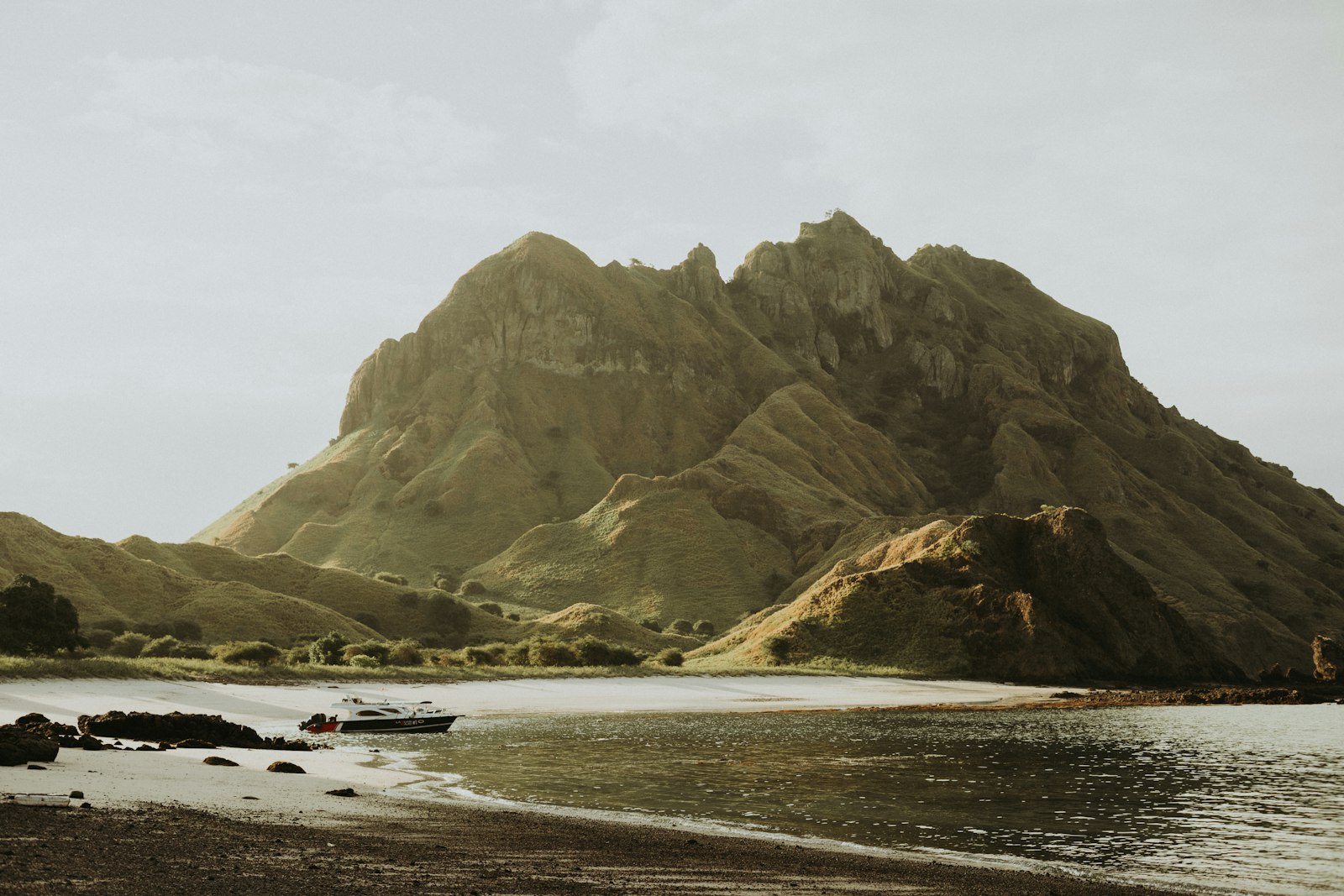
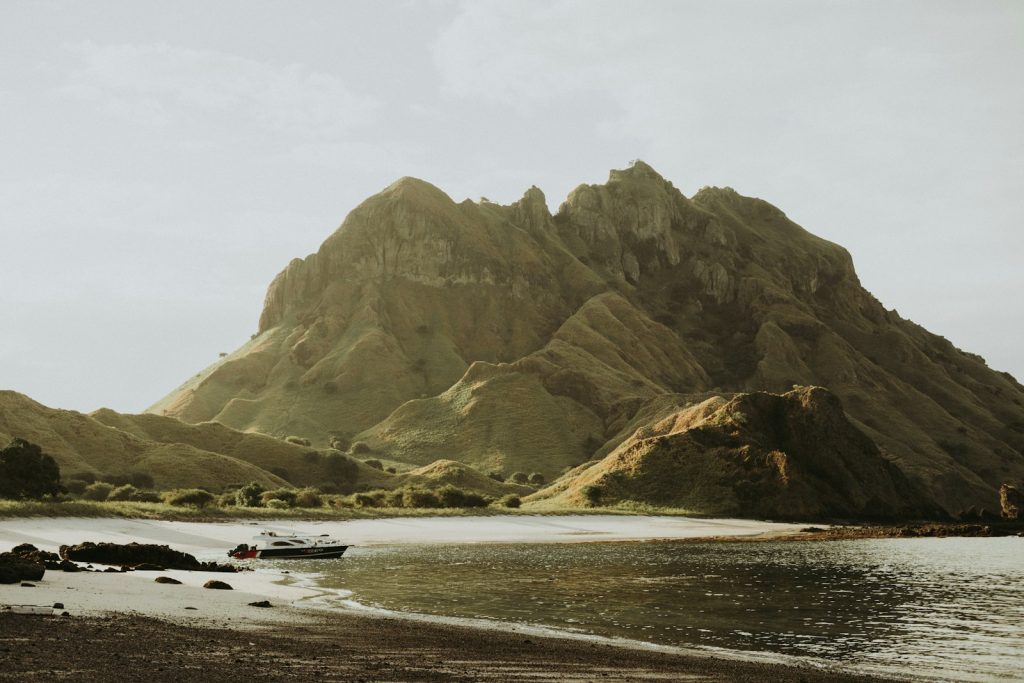
Padar Island is the centrepiece of most Komodo honeymoon itineraries, and for good reason: the viewpoint above the bay — reached by a steep but manageable climb on constructed steps — looks out over a landscape of multi-coloured bays and razor-back ridges that does not look quite real. Operators predominantly sell the sunrise version, and that is the right call for couples who want the dramatic eastern light and cooler temperatures on the climb. The hike takes roughly twenty to forty minutes at a relaxed pace; start before dawn to catch the light as the sun clears the hills.
After Padar, the standard move is to find a calm bay and snorkel during the middle of the day, then work your way toward a sunset position. The sail among the islands in the late afternoon — anchored off a quiet bay with drinks on deck as the light changes — is the moment most honeymooners remember most clearly when they get home.
Resort variant: you join a day boat from Labuan Bajo for the Padar sunrise, then return to your resort by late afternoon.
Liveaboard variant: you are already at anchor near Padar from the previous night. The boat repositions mid-afternoon to a bay for snorkelling and then to a sunset anchorage.
Day 3 — Manta Point, then Pink Beach
Manta Point — specifically the cleaning and aggregation sites around Karang Makassar (Makassar Reef) between Komodo Island and Flores — is the most variable day of any Komodo itinerary. Manta ray sightings depend on currents, water temperature, and plankton blooms. Sightings are reported frequently but are never guaranteed; that is the honest answer, and any operator who promises you will see them is overselling. The currents here are strong, and the activity is drift-snorkelling — you enter the water upstream and let the current carry you along the reef while the boat follows. Basic swim confidence matters. If you are a non-swimmer or very uncomfortable in open water, discuss this with your operator before the day begins.
After Manta Point, Pink Beach (Pantai Merah) on Komodo Island is the afternoon destination. The pink tint of the sand comes from the white base mixed with fragments of red and pink foraminifera — microscopic organisms that live in the reef system — ground fine by wave action. The snorkelling off the beach is colourful and accessible in calm conditions. It is also one of the more photographed spots in the park, which means it can be busy during peak season; earlier in the day tends to be quieter.
A private beach picnic or sunset dinner at a sandbar location is sometimes offered by operators as a romantic add-on for this day. These experiences are tide-dependent and subject to park management rules, which can change. Confirm availability and any conditions directly with your operator — do not book one expecting it to be guaranteed.
Resort variant: another day boat out of Labuan Bajo, or this is the night you embark on your one- or two-night private cruise.
Liveaboard variant: your boat repositions overnight to be near the manta sites by morning.
Day 4 — Komodo or Rinca Dragon Trek, then Rest
Komodo Island and Rinca Island are both home to the Komodo dragon (Varanus komodoensis). A guided ranger walk is mandatory on both islands — you cannot walk independently. Dragon sightings are highly likely but not guaranteed; the park prohibits luring or feeding, so you are walking their territory on their terms.
The practical difference between the two islands: Rinca is closer to Labuan Bajo and is a shorter trip, making it the better choice if time is tight or if anyone in your group is less mobile. Komodo Island is farther away, often paired with a Pink Beach stop, and has a larger land area with longer trek options. If you already visited Pink Beach on Day 3, combining Komodo Island and Rinca in the same day is possible but makes for a full, tiring day — something a honeymoon itinerary should probably avoid.
For a slow-paced 5D4N Labuan Bajo honeymoon itinerary, Day 4 afternoon is your intentional rest block. After the morning dragon trek, let the boat anchor somewhere calm, swim if you want, read, or simply lie on the deck. This is the point in the trip where couples either feel deeply rested or deeply fatigued, and the difference usually comes down to whether the schedule gave them a real afternoon off or scheduled yet another activity.
Evening on Day 4 is ideal for the Kalong sunset cruise. Kalong Island, near the town of Komodo, is known for its large colony of flying foxes (fruit bats) that lift off the island at dusk in enormous numbers. Watching from a boat deck at anchor as the sky fills with thousands of circling bats is one of those Komodo experiences that no photograph quite captures. It works as a private moment on a liveaboard or as a sunset-cruise add-on for resort guests.
Resort variant (if doing a two-night cruise): this is your second night on the phinisi, anchored somewhere quiet after the Kalong sunset. Return to your resort the following morning.
Resort variant (if doing a one-night cruise): you disembarked this morning; today is a resort day with a Rinca day-trip, and the Kalong sunset is a separate evening boat excursion.
Day 5 — Final Morning, Town Time, Departure
Do not schedule an early activity on the last morning. Sleep in, have a proper breakfast, and if your flight back to Bali is late afternoon, use the morning to walk the Labuan Bajo waterfront, pick up a souvenir or two, and sit somewhere with a coffee. The airport is five to fifteen minutes from town, so you have time.
If your flight is a lunchtime departure, the morning can include a quick trip to the nearest viewpoint or a short spa session at your resort — nothing that involves a boat or an early alarm.
Resort-Led vs. Liveaboard: Honest Comparison
| Factor | Resort-Led + 1–2 Night Cruise | Full Private Liveaboard (4 Nights) |
|---|---|---|
| Accommodation | Hotel room (proper bed, bathroom, A/C); boat cabin for 1–2 nights | Boat cabin for all 4 nights; shared or ensuite bathroom depending on vessel |
| Seasickness risk | Lower — resort nights as refuge; only 1–2 nights at sea | Higher — no resort escape; rough crossings affect sleep |
| Spa access | Resort spa available (AYANA, Ta’aktana confirmed); some phinisi offer on-deck massage | Depends on vessel; on-deck massage common on premium boats; full spa not available |
| Privacy on boat | Full privacy if charter is private; day boats shared with others | Full privacy (private charter assumed) — crew and your party only |
| Wildlife immersion | Good — you still visit all main sites by day boat or during cruise segment | Excellent — you are inside the park at anchor; can visit sites at off-peak times |
| Packing flexibility | Normal suitcase at resort; smaller bag for cruise segment | Full gear on boat; cabin storage is limited on most vessels |
| Cost range (couple, excl. flights) | Resort ~$350–$800+/couple/night + private phinisi from ~$4,000 for 2 nights (by quote) | Private phinisi 4 nights typically $6,000–$10,000+ full boat (by quote; peak season higher) |
| Best for | Couples who want both comfort certainty and a real boat experience | Couples who love boats, value being inside the park at anchor, comfortable with motion |
All prices are by quote; the ranges above reflect what is currently reported across the market. Peak season (roughly May through September, with July and August at the top) runs higher. Park entrance fees, ranger fees, and diving surcharges are frequently excluded from package prices — confirm itemisation with your operator before booking. The most-reported park fee structure for foreign visitors is around IDR 250,000 per person per day entry plus a conservation levy, though no single authoritative official tariff table is available in English; treat any number as a guide and confirm with your operator or the park office directly [VERIFY current rates].
If you want help comparing liveaboard options and getting real quotes rather than ballpark figures, our concierge partner Komodo Luxury covers both formats and operates in this area regularly. You can reach them on WhatsApp at +62 811 382 3875 or email sales@komodoluxury.com. Full disclosure: if you use our recommendation and proceed with them, they may pay us a referral fee at no extra cost to you — but no one can pay to change what we write or recommend.
What to Do If the Weather Turns
The dry season from roughly April through October brings the most reliable conditions, with May through September the calmest window. That does not mean every day is perfect. Channels between islands can run rough even in June, and an occasional day of high wind or swell is not unusual.
The five-day format absorbs a weather day without losing the trip. Here is how:
- If Day 2 is rough: swap Padar (open sea) for Kelor Island (sheltered, fifteen minutes from town), spend the afternoon at your resort or in town, and move Padar to Day 3 morning instead of Pink Beach. Pink Beach and Manta Point shift to Day 4.
- If Manta Point is running too strong: the site can be called by your skipper if currents are dangerous. Accept this gracefully. A no-manta day is not a failed trip; it is honest wildlife travel. Use the time to visit a snorkelling site that is sheltered.
- On a liveaboard: the boat simply does not move to the rough anchorage. Your skipper knows the sheltered bays; trust their read on conditions.
The wet season (roughly November through March) brings rougher and less predictable seas. The park does not close seasonally, but operators may change itineraries significantly, and some crossings may not happen. If you are planning a wet-season trip, discuss the realistic itinerary expectations with your operator before you book.
Planning the Komodo Town Plus Boat Honeymoon Itinerary
One format that does not get written about enough is what I think of as the “Komodo town plus boat” combination: you base yourself in Labuan Bajo for two nights, doing day trips in the national park, then you board a private phinisi for two nights and finish the cruise back in town before flying home. This gives you the best of both formats without committing fully to either.
The practical advantage is logistical: you arrive in town, you have a proper hotel room to unpack and recover from the flight, you eat dinner somewhere on the waterfront, and you sleep in a real bed before you get on a boat. On day three you embark on the phinisi. You spend two nights at sea, visiting the sites that are best experienced from the water — Manta Point early in the morning before day boats arrive, Pink Beach in the late afternoon when it is quieter, an anchorage off Komodo Island at dusk. On day four you have the Kalong sunset from the boat deck. Day five morning, you sail back to the Labuan Bajo harbour, disembark, and have the afternoon to sit in town before your flight.
This format works well as a 5 day Labuan Bajo couple trip because neither the resort nor the boat feels truncated. Two nights is enough to settle into a resort; two nights is enough to genuinely feel what it is like to live on a phinisi.
Booking and Pacing Notes
- Book early for peak season
- July and August see the highest demand for private phinisi charters. Boats that seat one or two couples get booked months in advance. If your honeymoon falls in peak season, enquire at least three to four months ahead.
- Flight timing matters
- Flights from Bali (DPS) to Labuan Bajo (LBJ) are roughly one hour ten to twenty minutes in the air. Garuda Indonesia, Indonesia AirAsia, Citilink, Batik Air, and others operate the route, with frequency varying by season. Book a morning or early afternoon arrival so you do not lose your first day entirely. Airline schedules change; verify current options at booking.
- Seasickness preparation
- If either of you has any history of motion sickness, bring medication — meclizine or dimenhydrinate are commonly used — and take it before you need it. On a phinisi, the amidships cabin (midboat, lower deck) typically moves least. Discuss this with your operator when selecting your vessel.
- Reef-safe sunscreen
- Some operators and conservation guidelines require non-oxybenzone, non-octinoxate sunscreen. Buy it before you travel; it is not reliably available in Labuan Bajo town. Combined with a rash guard and a wide-brim hat, it covers the equatorial UV that catches most visitors off-guard.
- Sandbar and private-beach picnic experiences
- These are offered as romantic add-ons and genuinely magical when they happen. They are also tide-dependent and subject to park management rules that can restrict access to specific beaches or sandbars. Confirm availability for your specific dates with your operator; treat them as a likely bonus rather than a guaranteed element.
- Park fees
- Fees are frequently bundled into tour and liveaboard packages. Confirm whether your quote is all-in or whether entry fees, ranger fees, and diving surcharges are additional. The 2022 proposal to charge IDR 3,750,000 per person was cancelled and is not in force; do not be alarmed by any source that still mentions it as current.
Ready to start planning? Send us your dates and questions and we’ll help you put together an itinerary that fits how you actually want to spend your honeymoon — not a standard package in a PDF.
Frequently Asked Questions
Is 5 days enough for a Komodo honeymoon, or should we go for longer?
A 5 day Komodo honeymoon itinerary covers every main site in Komodo National Park — Padar Island, Pink Beach, Manta Point, Komodo Island or Rinca for the dragons, and Kalong sunset — with a rest day built in. It suits couples who want the full experience without committing to a week or more. Seven days makes sense if you want to add Kanawa Island, explore more of the dive sites, or spend additional nights at a resort before or after the boat segment. Three days is doable but tight; you will not have a morning off.
Should we do a private phinisi charter or a resort for our Komodo honeymoon?
Neither is universally better; the right answer depends on how you both handle boats. A private phinisi gives you maximum immersion and privacy, anchored in bays where no one else is around, waking up inside the national park. A resort gives you a stable base, a proper bed and bathroom, and a spa. The hybrid approach — two resort nights plus two nights on a private charter — is genuinely the most popular format for couples who want both. Talk honestly with your partner about seasickness before you decide; a queasy liveaboard honeymoon is no fun for anyone.
What do private phinisi charters cost for a honeymoon couple?
For a private charter — meaning the whole boat is yours — budget from roughly USD 4,000 for a two-night cruise on a comfortable vessel, and USD 6,000 to $10,000 or more for four nights on a premium boat. Full-trip itineraries quoted as a package run higher. All figures are by quote and vary by vessel, season, inclusions, and departure dates; peak season (July–August) commands higher rates. Park fees, ranger fees, and diving surcharges are usually additional unless specifically stated otherwise. These are market ranges, not fixed prices — get a quote from your operator.
What is the best time of year for a 5-day Komodo honeymoon itinerary?
The dry season, roughly April through October, brings the most reliable conditions, with May through September offering the calmest seas overall. July and August are peak and therefore more expensive and more crowded for bookings. April, May, and September are excellent value shoulder months. The wet season (roughly November through March) brings rougher conditions; operators adjust itineraries, and some crossings may not be possible. Manta rays are reportedly present year-round at their aggregation sites, but sighting quality varies — some operators cite the cooler, plankton-rich months around December through February as productive, though this is not firmly established in official sources [VERIFY with your operator at time of booking].
Do we need to book park tours separately, or is everything included in a package?
Most private phinisi charters and resort day-tour packages include the boat transportation to the sites and ranger-guided walks on Komodo and Rinca, but the park entrance fees (approximately IDR 250,000 per person per day for foreign visitors, plus a conservation levy — confirm current rates with your operator or the park office) and diving surcharges are frequently listed as exclusions. Always ask for an itemised quote so you know exactly what is and is not included before you pay a deposit. If anything is unclear, that is a signal to ask again before committing.