How to read this: Labuan Bajo Honeymoon is an independent honeymoon planning & curation guide for Labuan Bajo and Komodo National Park (Flores, Indonesia) — we curate romantic stays and private phinisi sailings, then route your enquiry to a vetted partner (Komodo Luxury) who arranges the trip. We are not a resort, cruise operator or booking platform, and resort names are used only as neutral examples, not claims of affiliation or endorsement. Prices are by quote and vary by season, vessel and party; figures here are indicative ranges. Sea conditions, ferry and flight schedules, and park rules change — please verify with the operator and official Komodo National Park sources before you travel. This is general information, not advice or a binding offer. We may earn a referral fee at no extra cost to you, and it never changes what we publish.
The best time for a Komodo honeymoon is broadly May through September, when the dry season delivers calmer Flores Sea crossings, more reliable snorkeling conditions, and the clearest light for that Padar Island sunrise you have been picturing since you booked the flights. That said, the right month for your specific priorities — whether that is manta ray encounters, a quieter beach, a lower charter rate, or golden-hour couple photography — differs enough by season that a closer look is worth it before you commit to dates.
Komodo National Park does not close seasonally. Boats run year-round, and couples do marry (symbolically, at least) on pink-sand beaches in every month of the year. What changes is sea state, sky quality, crowd density, and the mood of the crossing — and those variables matter a great deal when your honeymoon hinges on two people feeling good on a boat at 6 a.m., not clutching the rail.
Dry Season (April to October): The Reliable Window
Roughly April through October, the southeast trade winds keep humidity lower, rain rare, and seas — by Indonesian standards — comparatively settled. For honeymooners planning their first time in eastern Indonesia, this window removes the biggest unknown: will our crossing to Padar be comfortable, or will we spend the morning fighting seasickness?
Within that window, May, June, July, August, and September are the most consistent. Crossings from Labuan Bajo to Komodo Island (roughly two to four hours by speedboat, longer by traditional phinisi) tend to run in calm enough conditions that couples who are not experienced sailors can genuinely enjoy the deck. That matters because your private phinisi honeymoon is largely lived outdoors — sunsets from the bow, breakfasts at anchor, snorkeling off the stern.
July and August: Peak Season Trade-offs
July and August bring the most tourist volume of the year, particularly on day-trip routes: Padar Island, Pink Beach on Komodo Island, and the manta cleaning station at Karang Makassar. If you are chartering a private phinisi for the whole boat, your couple’s bubble stays largely intact regardless of how many day boats anchor nearby. If you are joining a shared open-trip cruise — which can work beautifully at the right price point — you will share those anchorages with more boats in high season.
Charter rates for private phinisi are typically higher in July and August, reflecting demand. Ranges shift enough that getting a quote in advance (three to six months out is sensible) matters more than any published list price.
May, June, September: The Best Months for a Labuan Bajo Honeymoon
If someone asks me directly what the best month for a Labuan Bajo honeymoon is, my answer is usually June or September — and May runs a close second. All three sit in the same reliable weather corridor but before or after the peak rush. More operators have availability. Private phinisi charters occasionally carry slightly softer rates. Padar at sunrise holds fewer other hikers on the trail. These three months are, in the view of most experienced Labuan Bajo operators, the actual sweet spot for couples who want both reliable conditions and a degree of quiet.
June is the month I return to most often when couples ask for a single recommendation: the seas are calm, the air is clear, the light on Padar at 5:45 a.m. is extraordinary, and the park does not yet feel crowded. September has a similar quality, with the added advantage that charter prices sometimes soften as operators move toward shoulder season.
Shoulder Months: The Quietest Months for a Labuan Bajo Honeymoon
April and October earn the label of quietest months — Labuan Bajo honeymoon planning guides rarely spotlight them, but couples who time their trip here often report the best balance of solitude and reliable conditions. Both sit outside the peak wet season while avoiding the July-August crowds. Weather in both months is transitional — neither fully dry nor fully wet — but can surprise you with long stretches of clear sky and flat water.
April, in particular, sees fewer international visitors than any other dry-adjacent month. Some resorts and charter operators drop rates slightly. Pink Beach is far less crowded. The flip side: rain squalls can appear with less warning, and some days feel hotter and stickier than the deep dry. Couples who want solitude and are flexible about itinerary adjustments often find April genuinely lovely.
October brings a similar quiet. The park remains open and operational, boat movements continue, and you are as likely to have Padar to yourselves at sunrise as you are in any month of the year. A few operators start reducing their open-trip schedule as bookings thin out, so private charter or resort-based itineraries become the more reliable option.
| Month | Season | Sea State | Crowd Level | Price Pressure | Honeymoon Suitability |
|---|---|---|---|---|---|
| January | Wet | Rough / variable | Low–Medium | Low | Possible; weather risk real |
| February | Wet | Rough / variable | Low | Low | Possible; manta bloom [VERIFY] |
| March | Wet → transitional | Improving | Low | Low | Improving by late March |
| April | Shoulder / dry | Mostly calm | Low | Low–Moderate | Excellent — quietest month |
| May | Dry | Calm | Moderate | Moderate | Sweet spot |
| June | Dry | Calm | Moderate | Moderate | Sweet spot — editor’s pick |
| July | Dry | Calm | High | High | Best weather; busiest boats |
| August | Dry | Calm | High | High | Best weather; busiest boats |
| September | Dry | Calm | Moderate | Moderate–High | Sweet spot |
| October | Shoulder / dry | Mostly calm | Low | Low–Moderate | Excellent — very quiet |
| November | Wet | Variable | Low | Low | Weather risk increases |
| December | Wet | Variable–rough | Low–Medium | Low | Risk; possible manta bloom [VERIFY] |
Labuan Bajo weather by month varies: this table shows general tendencies, not guarantees. Conditions vary by year and by specific crossing. Prices are by-quote and differ by operator, vessel, and booking lead time.
Wet Season (November to March): Honest Expectations
The wet season runs roughly November through March, with December, January, and February typically the most unsettled months on the Flores Sea. Rain does not fall continuously — you can have perfectly clear mornings that deteriorate into afternoon squalls — but the unpredictability is the real challenge. A crossing that is fine at 7 a.m. may not look the same by 2 p.m.
Komodo National Park stays open. Rangers are on site. Operators continue running trips. What changes is that captains and park staff reserve the right to reschedule or reroute based on conditions — and on a honeymoon, being told that today’s Padar sunrise is postponed because the channel is rough is genuinely disappointing in a way it might not be on a regular dive trip.
For couples who have flexibility built into their itinerary — an extra day at anchor, a resort night on either end — the wet season can work, particularly in years when the monsoon is milder than average. The tradeoff is real: fewer boats, lower rates, quieter beaches, possible manta blooms (more on that below), and the particular beauty of a stormy light over the Komodo archipelago. Against: real motion on the crossing, potential itinerary changes, limited visibility for snorkeling after heavy rain stirs up sediment.
If this is your one-and-only honeymoon trip and the images in your head involve that specific pink-sky Padar sunrise photograph, do not bet it on the wet season.
Manta Ray Season at Komodo: What the Evidence Actually Shows
Manta rays are one of the reasons couples choose Komodo over other Indonesian destinations, so let us be precise about what is known and what is not.
Manta rays are reported year-round at Komodo National Park, particularly at Karang Makassar (Makassar Reef) between Komodo Island and Flores, where they gather at cleaning stations. The site works because manta rays return predictably to specific reef features — they are not truly migratory in the way some seasonal wildlife is. That means a June visit and a January visit can both produce manta encounters.
What does vary is the plankton concentration and water visibility. Some operators and dive guides report that December through February brings increased plankton blooms in certain channels, which in turn can draw higher manta activity. If that is accurate, it creates an interesting tension: the months with potentially higher manta activity overlap with the roughest sea conditions and least reliable photography light.
I want to be clear about the limits of that claim: no single firmly-sourced study establishes a universally agreed best manta season for Komodo [VERIFY with current operator intel]. Different operators cite different peak windows depending on which site they work and in which year. The December–February plankton bloom claim is widely repeated in operator materials but is not backed by a single published scientific consensus that I can point you to. Treat it as plausible and worth discussing with your operator, not as a guarantee.
What I can say with more confidence: manta encounters at Karang Makassar are never guaranteed, in any month. Sightings depend on current, tidal phase, time of day, and conditions that shift faster than any calendar can predict. An operator who promises you a manta is selling you a hope, not a fact. An honest one sells you the best opportunity they can arrange.
For couples who are specifically planning around manta encounters, May through September offers the easiest sea conditions to reach Karang Makassar and spend comfortable time in the water — even if December through February may produce higher aggregate activity on some counts. If manta is your priority and you are diving-comfortable, late May or September lets you combine reliable conditions with sites that are productive across most years.
Padar Sunrise Photography: Which Light Actually Works
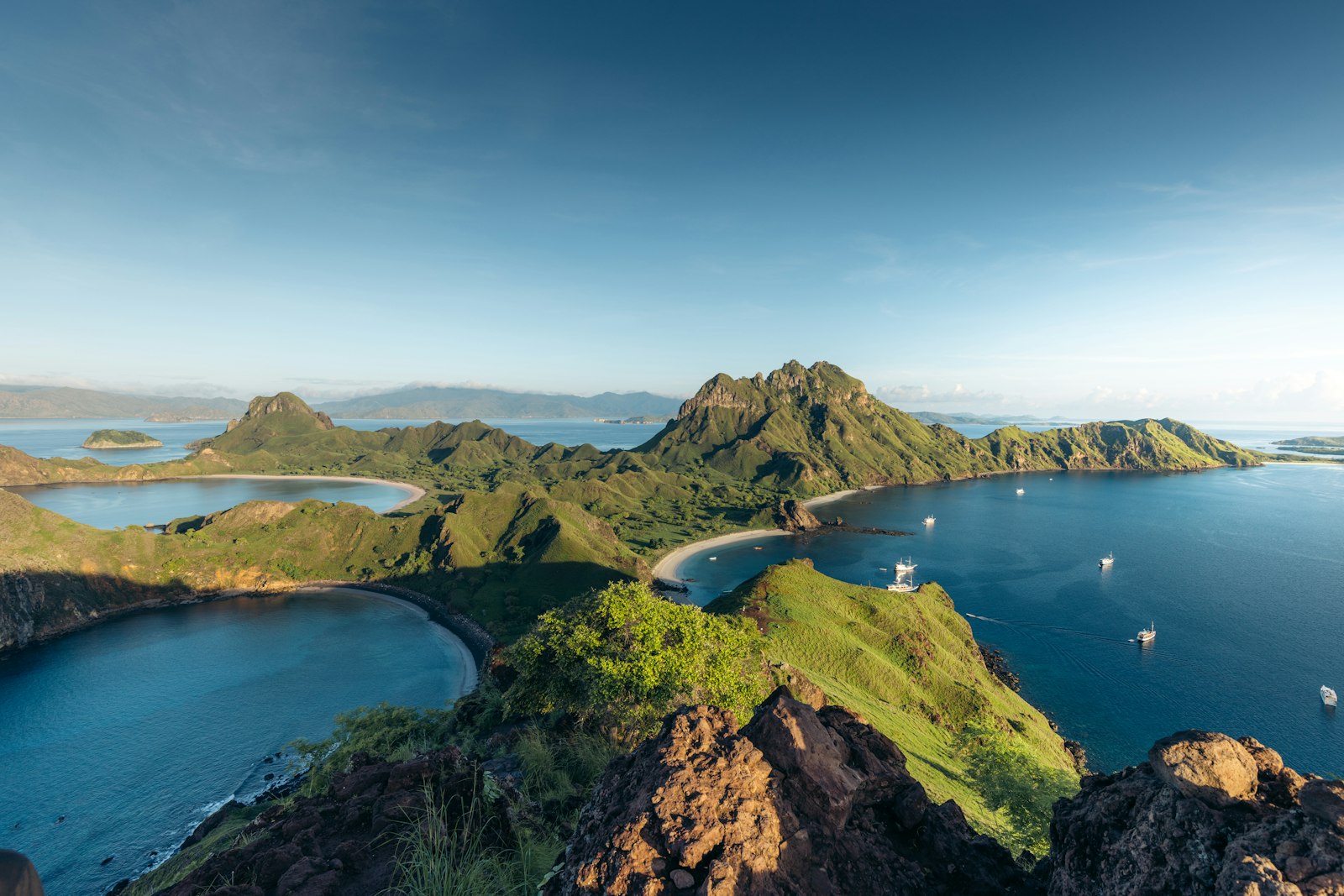
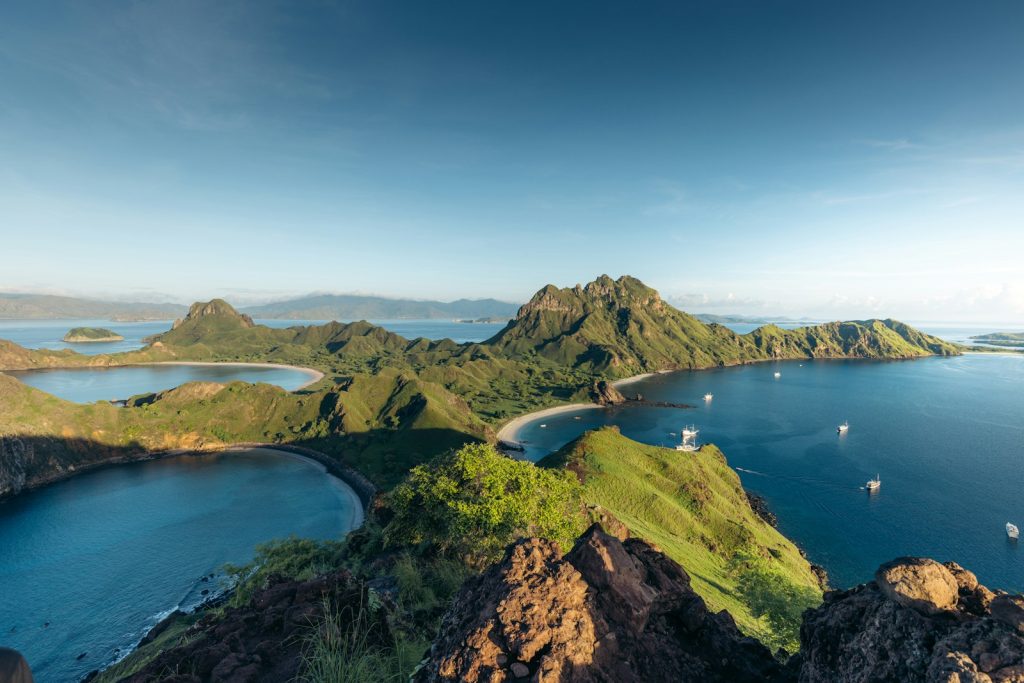
Padar Island is the image most couples associate with Komodo — the three-pronged bay viewpoint, the silhouette of hills above colored beaches, the moment when the sun clears the eastern ridgeline and everything turns gold. If you are planning a couples shoot up there, the month matters.
The dry season gives you the most reliable chance of that clear sunrise. In May, June, and September, the probability of a cloudless or mostly-clear sky at dawn is meaningfully higher than in any wet-season month. July and August are equally reliable for sky clarity but add more other hikers on the trail — the staircase up Padar is a narrow shared path, and peak season means you will not have the summit to yourselves at golden hour.
The hike itself takes roughly 20 to 40 minutes depending on pace, ascending man-made steps. Boats typically depart Labuan Bajo at around 5 to 6 a.m. to time arrival for sunrise. That means leaving the marina before dawn, which is one of the great pleasures of a private charter — you can be on deck as the town lights fade behind you, watching the islands take shape in the dark.
A practical point for photographers: in June and September, the low-angle morning light at Padar tends to produce warmer tones than in the middle of a cloudless July day. The haze that sometimes settles over the bays in August can actually create beautiful, diffused backlight in the right conditions. No month is categorically superior for every couple — it depends on your style of image and what conditions the morning delivers.
What April and October offer that no other dry-adjacent months do: a genuine likelihood of having the viewpoint largely to yourselves. If that matters more than perfect certainty of clear sky, those shoulder months are worth considering seriously.
How Seasons Affect Your Practical Honeymoon Planning
Flight Access and Arrival Timing
Labuan Bajo’s Komodo International Airport (IATA code LBJ) sits about two kilometres from the town centre, roughly five to fifteen minutes by taxi. The most common routing for international couples is via Bali’s Denpasar Airport (DPS), with the onward flight to LBJ taking around one hour ten to twenty minutes in the air. Carriers on the DPS–LBJ route have included Garuda Indonesia, Indonesia AirAsia, Citilink, Batik Air, Lion Air, and Wings Air, with schedules and frequency varying by season — generally four to six flights daily in low season, more in peak. Direct services from Jakarta (CGK) and Surabaya (SUB) also operate. Airline schedules change, so verify current options close to your booking date.
In high season (July, August), last-minute flights to LBJ can be limited and prices elevated. Booking both your charter or resort and your flights well in advance — three to six months out is not excessive for a July or August honeymoon — is genuinely useful advice, not a booking-pressure line.
What the Wet Season Looks Like on the Ground
Couples who visit in November through March often report that the rain itself is not constant — mornings can be beautiful, and some of the most dramatic light over the Komodo archipelago comes right before or after a passing squall. The challenge is that you cannot plan around it. A shore lunch on a private sandbar gets complicated when a squall rolls through. Your outdoor candle-lit deck dinner needs a backup plan. None of this is insurmountable, but it does require a different mindset than the dry season, where you wake up and roughly know what the day looks like.
Seasickness is also meaningfully more likely in the wet season, particularly on open-sea crossings to Komodo Island (roughly two to four hours by speedboat from Labuan Bajo harbour, longer by phinisi). Couples who are prone to motion sickness should be honest with themselves about this. Meclizine or dimenhydrinate taken before departure helps. Choosing an amidships cabin on a phinisi (lower centre of gravity, less motion) helps more.
Park Fees and Logistics Across Seasons
Komodo National Park entrance fees apply year-round and are bundled into most tour and liveaboard packages. The widely reported structure for foreign visitors involves an entry ticket, a conservation levy, and a harbour fee — totalling roughly IDR 375,000 per person per day across those components, though the exact breakdown varies by how operators package them. Confirm what is included and itemised with your operator before departure. A ranger guide is mandatory for dragon-viewing treks on Komodo and Rinca Islands, with the ranger fee commonly cited at around IDR 200,000 per group of up to five people — again, often bundled. These figures are reported ranges, not an official government tariff; verify current rates directly with your operator or the park office.
One thing that does not change by season: the 2022 proposal for a very high per-person membership fee (IDR 3,750,000) was officially suspended and effectively cancelled. It is not in force and any source still listing it as current is outdated.
Ready to plan the specifics? Reach out via our enquiry form or connect on WhatsApp (+62 811-3823875) for a no-pressure conversation about timing, vessels, and what a private Komodo honeymoon actually looks like for your dates. Our partner operator Komodo Luxury can also be reached at sales@komodoluxury.com. If you book through our free recommendation and proceed with a partner operator, they may pay us a referral fee at no extra cost to you.
Honeymoon Budget by Season: What to Expect
Pricing for a Komodo honeymoon is resolutely by-quote — the range between a comfortable shared open-trip cruise and a full private phinisi charter for two is wide enough that any single number would mislead you. That said, a rough bracket helps with planning.
- Private phinisi charter (whole boat, for two)
- From approximately USD 4,000 for two nights; USD 6,000–10,000 and above for three to four nights on premium vessels. Peak-season rates (July, August) tend toward the upper end; shoulder rates soften. Prices vary significantly by boat grade, crew, and included excursions.
- Shared or cabin liveaboard (open trip)
- Comfortable above-deck two-night cruises from roughly USD 1,000 per couple total; per-person pricing on nicer shared liveaboards runs approximately USD 360 per day. Budget open trips start lower. You share the vessel with other travellers — usually small groups of divers or snorkellers.
- Land-based luxury resort honeymoon
- High-end resorts in and around Labuan Bajo range from roughly USD 350 to USD 800 and above per couple per day, including meals and excursions at the upper end. Island resort properties in the national park vicinity can run USD 398–580 per night including meals but excluding diving surcharges.
- Day-diving (if diving is your priority)
- Roughly USD 160 per day for three dives or USD 200 per day for four dives from a resort or liveaboard, excluding park fees.
The wet season (November to March) is theoretically the cheapest window, with lower charter demand and some resort promotions. In practice, the unpredictability of weather means you need contingency days built in, which can raise your total spend even if per-night rates are lower. The shoulder months — April and October — offer a better balance: rates that are not at the July peak but conditions that are mostly reliable.
Choosing Between Dry Season and Wet Season: The Honest Summary
There is no framing of this that avoids the obvious conclusion: the best time for Komodo honeymoon planning — if you want the most reliable, most photographable, most comfortable experience — is May through September, with June and September as the editor’s picks for couples who also want relative quiet. July and August deliver the most consistent weather but the most boat traffic.
The wet season is not off-limits, and some couples find it genuinely beautiful — emptier beaches, lower costs, and the particular drama of equatorial weather. But it requires acceptance that your itinerary may shift, and that a crossing that was supposed to be two hours to Komodo Island might be rescheduled by the captain for another day. That is not a failing of the destination; it is the Flores Sea being honest with you.
April and October split the difference. They are the months for couples who want the stillness of the off-season but cannot stomach the wet-season gamble. The beaches are emptier, the rate cards are softer, and a sunrise on Padar with no one else on the trail is a real possibility, not just a marketing image.
A Note on Combining Bali and Komodo
A very common pattern for honeymoon couples — and one that makes logical sense — is to begin in Bali (a short flight from most international hubs, and a one-hour-ten-to-twenty-minute hop onward to Labuan Bajo) and spend three to five days in Komodo before returning. Bali serves as a decompression arrival point: familiar, accommodating of any timezone-adjustment lag, and logistically easy. Komodo is the centrepiece.
From a seasonal standpoint, both destinations share roughly the same dry-season calendar, so a May-to-September Bali-then-Komodo itinerary is coherent. The key planning note is that LBJ flight frequency increases in high season and drops in the wet months — build buffer into your routing if you are travelling in March, November, or December, when cancellations are more common.
Frequently Asked Questions
What is the best month for Labuan Bajo honeymoon travel?
The best month for a Labuan Bajo honeymoon is June or September if you want calm seas, reliable weather, and moderate crowd levels all at once. May is an equally strong choice. All three are peak-dry-season months that combine comfortable boat crossings with good photography light. If you prefer quiet over guaranteed blue skies every day, April and October are the quietest months for a Labuan Bajo honeymoon — noticeably fewer visitors and softer charter pricing. July and August are the most weather-reliable months of the year but draw the highest boat traffic to Padar and Pink Beach. calm seas, reliable weather, good photography light on Padar, and fewer boats at the main sites than July or August. If maximum quiet is more important than guaranteed clear skies, April and October are excellent shoulder-season options with noticeably lower visitor numbers and somewhat softer charter rates.
Is the Komodo manta season actually December to February?
Some operators and guides report that plankton blooms between December and February may increase manta ray activity at certain sites, including Karang Makassar. This claim is widely repeated in operator materials, but there is no single published scientific consensus establishing it as the definitive best window. Manta rays are reported year-round at Komodo; sightings depend on current, tidal timing, and conditions on the day, not just the calendar month. The honest answer is that no month guarantees a manta encounter, and the dry-season months of May through September combine reliable sea conditions with consistently active manta sites. Discuss specific site timing with your operator before booking around manta encounters.
What is the weather like in Labuan Bajo by month, and can it ruin a honeymoon?
The dry season runs roughly April to October, with the most settled conditions in May through September. The wet season (November to March) brings variable and sometimes rough seas on Flores Sea crossings, with rain squalls that can disrupt outdoor activities. The park does not close seasonally, but captains and rangers can and do reschedule crossings or specific site visits when conditions are unsafe. A wet-season honeymoon can be wonderful — quieter, cheaper, with dramatic light — but requires itinerary flexibility that not every couple wants to budget for during a once-in-a-lifetime trip.
What are the quietest months for a Labuan Bajo honeymoon?
The quietest months Labuan Bajo honeymoon travellers consistently overlook are April and October, but those are precisely the months when the park feels most like it belongs to you. Both sit within or adjacent to the dry season, meaning sea conditions are mostly manageable — not the guaranteed-calm of July, but far better than the core wet months of January and February. Both carry some transitional weather variability — you are not in the deep heart of the dry season — but they are meaningfully less crowded than May through September, and the risk of rough-sea disruption is much lower than in the core wet months of January and February. For couples who prioritise privacy over guaranteed blue skies every single day, these shoulder months are genuinely underrated.
Does the season affect private phinisi charter prices?
Yes, meaningfully. Demand peaks in July and August, and most reputable operators price their private charters accordingly — rates at the upper end of their range during those months. May, June, and September sit at moderate rates. April and October often carry softer pricing as operators look to fill availability during slower periods. These are not published tariffs but tendencies across the market; actual quotes depend on vessel grade, trip length, included activities, and booking lead time. A three-to-six-month lead on a peak-season charter is worth the planning overhead.